

Published Monday, 10 November -Issue #9
3 Quick Bites: Last Week in Dementia News
5,000 Steps a Day May Help Slow Alzheimer’s-Linked Decline
Source: Financial Times / Nature Medicine (3 November 2025) • Read it here
Story
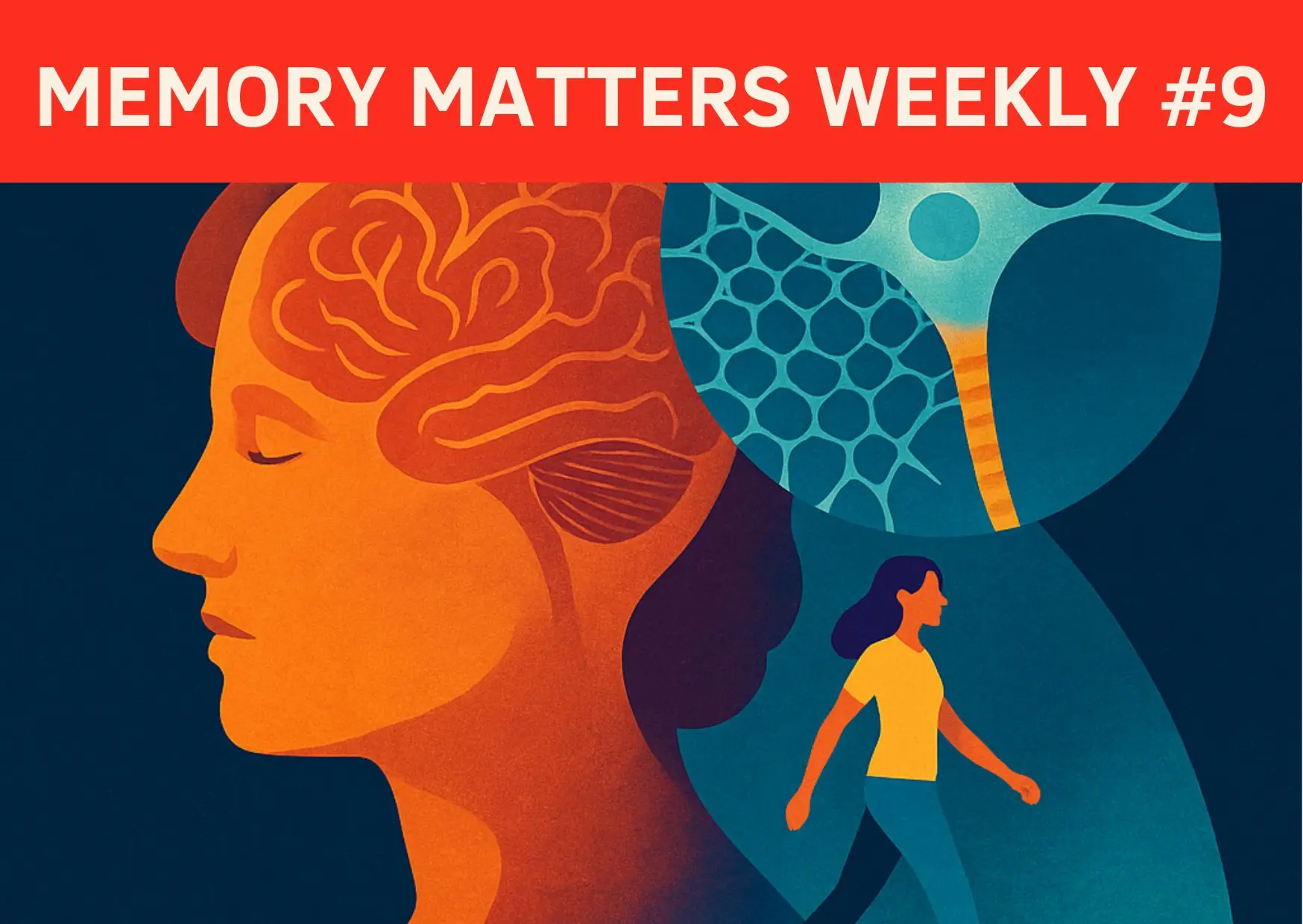
A 14-year study from the Harvard Aging Brain Study, published in Nature Medicine, followed almost 300 adults aged 50–90 who were cognitively healthy at the start. Those who walked more than 5,000 steps a day experienced slower cognitive decline and less build-up of amyloid and tau proteins in their brains than less active peers. Even modest activity levels between 3,000 and 5,000 steps showed measurable benefits, with an optimal range plateauing at 5,000 to 7,500 steps per day. The link was strongest among people already showing early Alzheimer’s-related brain changes.
Why it matters
At first glance, the message seems familiar: exercise is good for you. But this study goes further than most. It connects everyday movement, measured in step counts, with patterns in the brain such as slower accumulation of amyloid and tau proteins. It doesn’t prove that walking directly prevents Alzheimer’s, but it strengthens the case that keeping physically active supports the systems tied to memory and cognition.
My take
This study can’t prove causality, and exercise alone isn’t a magic bullet to prevent or halt dementia, it’s one piece of a complex puzzle. The under-representation of highly active individuals and the need for randomised trials mean we can’t treat walking as a guaranteed defence. Still, if walking over 5,000 steps daily might slow Alzheimer’s-related decline, that’s motivation to move more. Not as a cure-all, but as a small, proactive act that supports both brain and body health.
Why Alzheimer’s Patients Forget Family and Friends
Source: University of Virginia / Alzheimer’s & Dementia Journal (6 November 2025) • Read it here
Story
Researchers at the University of Virginia found that the breakdown of delicate ‘perineuronal nets’, thin, web-like structures surrounding neurons, disrupts social memory and recognition of familiar people. In mice, when these protective nets were damaged, the animals forgot other mice they had met, mirroring how people with Alzheimer’s forget familiar faces. Using existing drugs called MMP inhibitors to preserve these nets protected the mice’s social memory, offering a new target for potential treatments.
Why it matters
This discovery shifts focus from chemical build-up (like amyloid plaques) to structural protection. the physical scaffolding that keeps memories intact. If scientists can find ways to preserve these nets in humans, it could reshape how we think about memory loss, especially the kind that feels most painful for families: being forgotten. It’s early work, but it opens a path to therapies aimed at protecting these structures before memory fades.
My take
For anyone who’s experienced that moment when a loved one looks at you and doesn’t recognise you, this research feels deeply personal. It shows there’s a physical reason behind that loss, and a small hope that one day we might protect against it. The researchers are clear: more work is needed on safety and effectiveness before human trials. It won’t solve every aspect of Alzheimer’s, but it adds a new direction worth watching.
Dedicated National Network of Dementia Research Nurses Launches
Source: University College London / NIHR (6 November 2025) • Read it here
Story
A new UK-wide programme led by University College London and the NIHR, supported by a £3 million Alzheimer’s Society pilot, will embed specialist dementia research nurses into NHS hospitals and community services. The goal is to make dementia research accessible to everyone, including later-stage patients and under-represented communities, by linking everyday care directly with clinical trials. The network aims to increase participation and ensure future treatments reflect the full diversity of people affected by dementia.
Why it matters
This network addresses a critical gap in dementia research: limited access to clinical trials and opportunities to participate. Many people want to help but don’t know how, while studies often struggle to recruit beyond a narrow group. Placing trained research nurses in everyday NHS settings bridges that gap. Someone visiting a memory clinic or hospital ward might now be invited to take part in a trial that improves care for the next generation.
My take
If this works as intended, it could change dementia research in the UK. A £3 million pilot is a start, not a solution, and not every family will have immediate access. But it’s progress. It gives people with dementia a way to contribute directly to the science shaping their care. Yes, the funding must grow, and participation can be daunting for families already stretched thin. Still, it plants a seed of progress, and I’ll be watching to see how it grows.
I hope you found something in here that helped breakdown dementia news for caregivers written by a former caregiver. Thanks for reading!