
There’s a line in caregiving that you don’t notice until you’ve crossed it. One day you’re helping. The next you’re quietly taking over. I thought I was protecting my mum. I wanted to make life safer and easier. But in doing so, I sometimes took away small moments of independence that still belonged to her.
That’s when I began to understand the concept of safety without smothering, and learning when to step back in dementia care.
This post may contain affiliate links. If you buy through them, I may earn a small commission at no extra cost to you. See our Privacy Policy for details.
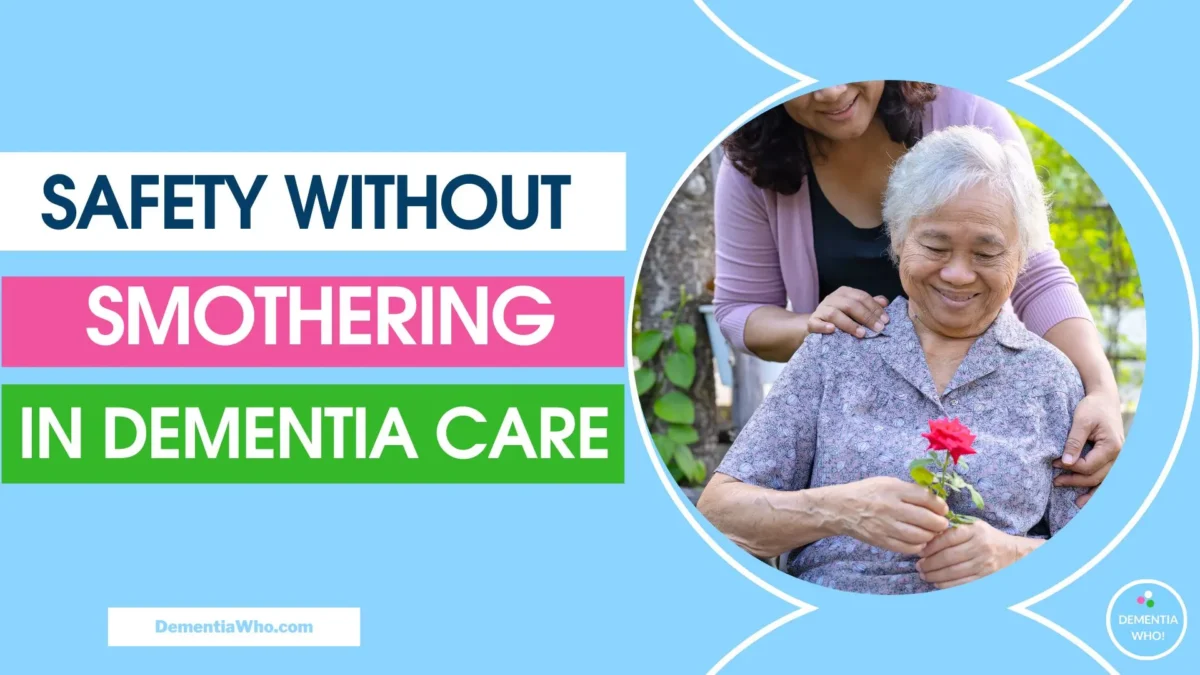
When Helping Turns Into Taking Over
Caring for someone in the middle or later stages of dementia may mean doing a lot with your hands, or it did in my case as mum was also wheelchair bound. I lifted. I guided. I washed. I helped her eat. I dressed her.
But I realise now that I did some of those things too earlier, looking back.
It becomes second nature to step in before something goes wrong. But each time we rush in, we risk removing a small piece of independence.
“Helping too much can feel like love in the moment, until you realise you’ve quietly taken something away.”
I was guilty of it often. I’d move her arm into her cardigan before she tried. I’d push the walker forward to make things faster.
It creeps in slowly, you mean the best. You’re patient, you wait, but when exhaustion kicks in, however hard you try something may change. Things overtake you, caused by the endless to-do lists and the background hum of stress that never switches off. When every hour is filled with appointments, care visits, phone calls, and paperwork, you may start moving for both of you.
And that’s where you have to catch yourself.
The Pressure to Keep Things Safe
Caregivers live in a constant state of risk management. You think about:
- Falls and slips
- Spills and choking
- Missed medications
- Fatigue and confusion
Everything feels urgent. Everything feels like it could go wrong. But safety without smothering asks something different. It asks you to protect without taking over.
You’re stepping in from love, so don’t beat yourself up about it. You’ve recognised it and now you need to start making changes so that it doesn’t become a habit and instead move towards safety without smothering. I know how hard that can be, let me share my experience.
When Safety Becomes Control
My mum’s mobility began to decline. At first, we used a walker. It was slow, but it worked. Then urgency crept in. Bathroom trips took too long. Accidents happened. So I hurried her , thinking I was being kind.
So I got a commode, but introducing that without my mum losing dignity was another struggle (another time!). Switching to commode made life easier but maybe I did it too soon. Maybe a lighter walker, a nearer chair, or timed routine (as later learned would have helped).
Sometimes, safety becomes control when love and fear get tangled.
Adaptation Instead of Replacement
Helping doesn’t have to mean doing everything. Often it means adjusting the world around the person so they can still take part. Simple changes can make all the difference:
- Large-handled adaptive utensils
- Non-slip mats under plates
- Mugs with easy-grip handles
- Clothes with Velcro or elastic waists
These small things keep someone involved. They allow you to help with them, not for them. I wish I had known that sooner. I thought “helping” meant kindnes. Now I know taking things “slow & being patient” meant real kindness.
The Quiet Loss of Choice
Independence can disappear quietly. I saw it happen with clothes. Each morning, I laid out outfits for my mum to dress her. Easy to wear. Easy to wash. All practical. One day, I’d left her wardrobe open, and she reached for a bright sari style dress in her favourite colour, red. that I hadn’t chosen. It was her way of saying, I’m still here, this is what I want to wear.
Choice isn’t just about clothes, it’s about dignity.
After that, I began offering small options. Two cardigans instead of one. Two scarves instead of none. Choice was the important factor, deciding on what she wanted without being overwhelmed by a whole wardrobe.
When Life Moves Too Fast
Slowing down sounds simple. Living it is not. There’s always someone waiting, another task, another visit.
I remember days that felt like too much going on all at once. Care workers in and out. Phone calls. Cooking. Cleaning. Forms. Laundry.
And when life moves that fast, it’s easy to see why patience can disappear.
But safety without smothering depends on it.
That’s why you have to build in time for yourself, to pause, to reflect and think about what’s really important. Time, patience, room for your loved one to breathe without noise is so important.
And then something beautiful would happen. She’d find the word she was searching for. She’d lift her hand to help. She’d smile when she succeeded.
Caregiving isn’t only about doing. It’s about not doing too soon.
Emotional Safety Matters Too
For a long time, I thought safety meant preventing harm. Then I saw that real safety is also emotional.
It’s about confidence, dignity, and being seen. When someone is always helped, they start to believe they can’t do anything. That kind of help becomes a quiet harm. Caregiving should build trust.
You learn that through your caregiving journey, there will be false starts, times when everything is going well and times where everything doesn’t and sometimes before you know it, you’ve moved away from the caregiver principles you believed in just to manage.
But you can rebuild that trust by doing things step by step, recognising when you need help and getting it. Reframing how you talk about loved ones, and recognising that you and the situation isn’t perfect, we can only dp the best we can for our loved ones. Learn to:-
- Trust that your loved ones are still capable of much more
- Trust that mistakes are okay
- Trust that slowing down is not failure
Safety without smothering is the space where that trust grows.
Guilt and Growth
Every caregiver carries regrets. I do too. Times I rushed. Times I spoke for her. Times I didn’t wait long enough. But guilt doesn’t help. Awareness does. I know when she was alive I caught myself and reassessed what I was doing.
So to help others, ask yourself, your loved ones, one small question:
“Can she (they) still take part in this in some way?”
That question changed everything. It stopped me from taking over. It helped me see that helping doesn’t mean control. It means working positively together.
The term care partner works from a spousal perspective, but I’ve always felt more comfortable with being mum’s caregiver or carer not her partner. You may disagree,
I will never be her partner, she is, was my mum. That’s a different type of relationship. I cared for her as she cared for me.
Love, Fear, and Letting Go
Caregiving is full of love, but fear hides inside it too. Fear of falls. Fear of decline. Fear of loss. Sometimes I helped too much because I couldn’t face watching her struggle. Taking over felt protective. But it also took away her voice.
It took me a while to understand what that was. Until I saw love differently. Sometimes love means waiting for even the most basic things.
Letting mum stir the tea even if it spills. Letting a meal take twenty minutes longer. Letting silence stretch until she finds her own word. That’s what safety without smothering looks like in real life.
What I Know Now
Safety isn’t just about preventing harm. It’s about keeping someone themselves. You’ll get it wrong sometimes.
You’ll rush. You’ll take over. Then you’ll notice. You’ll stop. You’ll try again.
Because caring isn’t about doing everything. It’s about standing beside someone in a way that keeps them safe and lets them be who they are.
Sometimes that means holding your hands still, waiting a little longer, and remembering that love doesn’t always look like doing.
Sometimes it looks like letting be.