
New dementia insights this week in Memory Matters Weekly #16: when medication fills care gaps, prevention strategy reform, and oral health’s link to isolation and risk.
Published 18 January 2026 -Issue #16
3 Quick Bites: Last Week in Dementia News
Risky medications still widely prescribed in dementia
ScienceDaily • Jan 2026 • Read it here:
Story:
A UCLA study tracked nine years of Medicare prescription data and found that one in four older adults with dementia are still prescribed brain-altering medications linked to falls, confusion, and hospitalization. These include antipsychotics, benzodiazepines and other sedatives, often used to manage distress or behavioural symptoms. The study found that long-term prescribing remains common, particularly as dementia progresses.
The researchers found a concerning shift: more prescriptions are being filled at long-term care facility pharmacies rather than being managed by psychiatrists who might evaluate underlying causes.
Why it matters:
The findings highlight a persistent gap between clinical guidance and real-world practice, raising questions about how dementia care is supported when symptoms progress. For caregivers, this confirms what many already suspect: medications are being used to manage behaviors rather than address root causes. When someone with dementia becomes agitated or wanders, the quickest response is often a prescription, not the time-intensive work of identifying treatable causes like pain, infection, medication interactions, or unmet needs.
My take:
This isn’t about blaming families or clinicians. It reflects a system where non-drug support is often limited, leaving medication as the default option. What’s missing is consistent access to alternatives like behaviour support, staff training, and time. Until those gaps are addressed, risky prescribing will remain a symptom of wider failures in dementia care.
Proper care starts with evaluation: is this agitation caused by pain? An infection? Medication side effects? Depression? Environmental factors? But that takes time, training, and staff that most facilities simply don’t have. It’s easier and cheaper to prescribe sedation than to address staffing shortages or improve care environments. Families need to ask three questions: what problem is this drug meant to solve, what else has been tried, and what’s the plan to stop it? These medications aren’t meant to be long-term solutions, but that’s increasingly how they’re being used.
Dementia risk reduction needs policy change, not more lifestyle advice
Nature Reviews Neurology • 16 Jan 2026 • Read it here
Story:
A panel of 40 UK experts released 56 recommendations on how governments should tackle dementia prevention. The key shift: this isn’t about telling people what to do, it’s about whether governments are willing to build the systems that make prevention actually possible. The experts deliberately chose to talk about “reducing risk” rather than “preventing” dementia, because honesty about what’s achievable matters more than making big promises. They identified hearing loss, social isolation, and high blood pressure as top priorities, but emphasized these can’t be addressed through individual effort alone.
The research warns that badly designed prevention policies could actually make inequality worse by putting all the responsibility on individuals while ignoring structural barriers. Instead, they recommend embedding dementia prevention into how governments already tackle other chronic diseases like heart disease and diabetes, making it a cross-governmental strategy that addresses root causes like poverty, air pollution, and lack of access to healthcare.
Why it matters:
Public awareness that dementia risk can be reduced remains extremely low, and this extends to the policymakers making decisions. This research provides the first comprehensive framework specifically designed to translate what we know about dementia risk into actual government policy. It shifts the conversation from lifestyle tips to a governance challenge: are health systems actually set up to support people fairly and at scale?
My take:
This matters for caregivers because it reflects lived reality. You can’t prevent dementia by willpower alone when you can’t afford hearing aids, when there’s no safe place to exercise, when healthy food is expensive, or when getting a doctor’s appointment takes months. Real prevention means fixing the systems, not blaming individuals. Whether governments will actually build that infrastructure remains to be seen, but at least the blueprint now exists. The current approach, telling people to do better while leaving structural barriers in place, isn’t just ineffective, it’s unfair.
Poor oral health may be linked to higher dementia risk
EurekAlert! • 13 Jan 2026 • Read it here
Story:
Researchers reviewing decades of evidence on oral health and dementia argue that something important has been underplayed. While much of the focus has been on inflammation and bacteria linked to gum disease, this team points to the other social changes that follow tooth loss and chewing difficulty.
When eating becomes hard or uncomfortable, people often stop joining meals. When speaking feels awkward or embarrassing, conversations start to peter out. Social isolation is now recognised as a major dementia risk factor, and poor oral health can push people toward it.
Alongside the review, the researchers followed more than 3,000 older adults in Japan over six years. They found that chewing difficulty strongly predicted weight loss. Weight loss led to frailty, and frailty increased dementia risk. It wasn’t a single cause, but a chain of small losses that added up over time.
Why it matters:
Oral health is often treated as a comfort issue, or something to deal with later. This research suggests it’s harder to separate mouth health from brain health than we might like. Many caregivers will recognise this pattern immediately. Meals skipped. Conversations avoided.
My take:
This isn’t about saying oral health problems cause dementia. It’s about recognising how easily they can feed into isolation, poor nutrition, and physical decline. What frustrates me is how unrealistic the advice can feel. Dental care for older adults is expensive, patchily covered, and often hard to access, especially once mobility or cognition declines. Saying oral health matters for dementia risk means very little if families can’t get their teeth checked, afford treatments or ongoing care supported. Like so much dementia prevention advice, it only works if access comes first.
What This Week’s Stories Tell Us
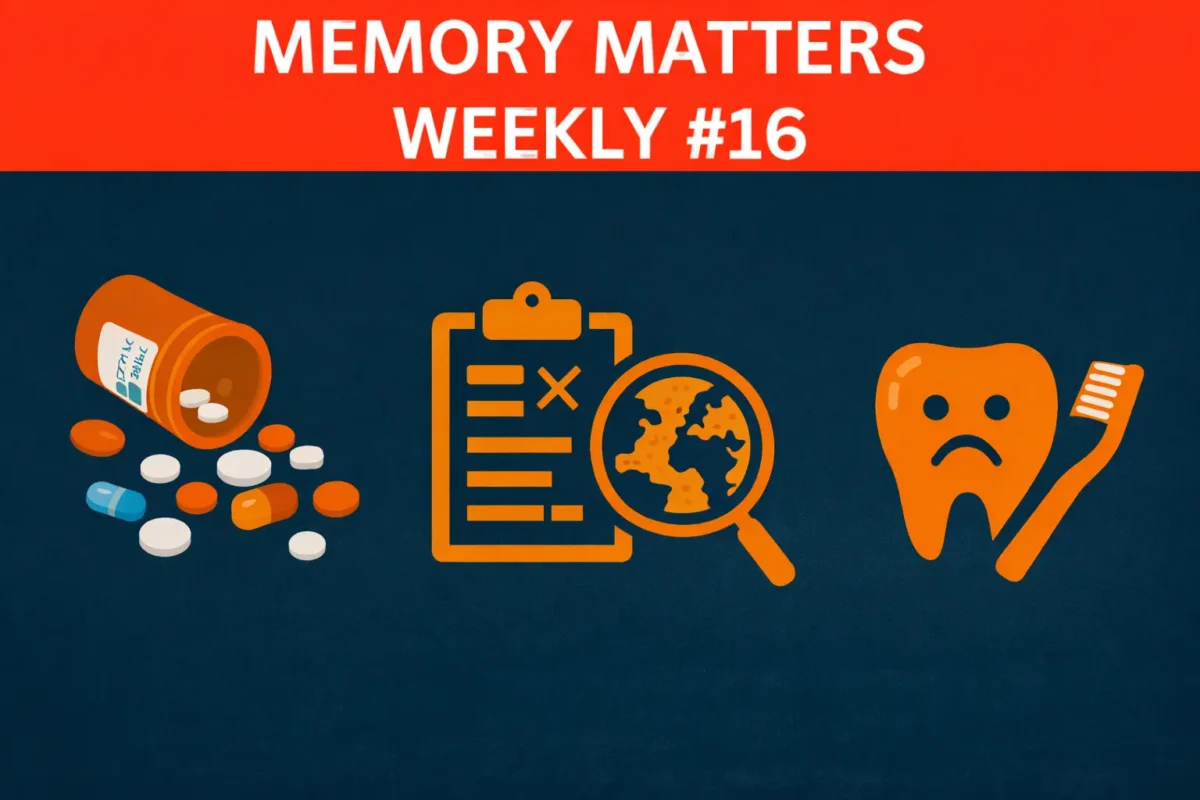
Taken together, this week’s stories show how often dementia care is shaped by what’s missing.
- When support isn’t available, medication fills the gap.
- When prevention isn’t built into everyday systems, responsibility quietly shifts onto individuals.
- And when small losses like eating or speaking go unaddressed, isolation sets in long before anyone names it.
None of this happens in isolation. It’s the result of decisions made earlier, higher up, and often out of sight of families living with the consequences.