
When you’ve been caring for someone with dementia for a while, you start noticing the small signs of restlessness, tapping fingers, rubbing the blanket, picking at sleeves. I used to see it as anxiety. Sometimes it was boredom, sometimes energy with nowhere to go. For my mum her tell tale sign was when she ripped tissues into tiny pieces.
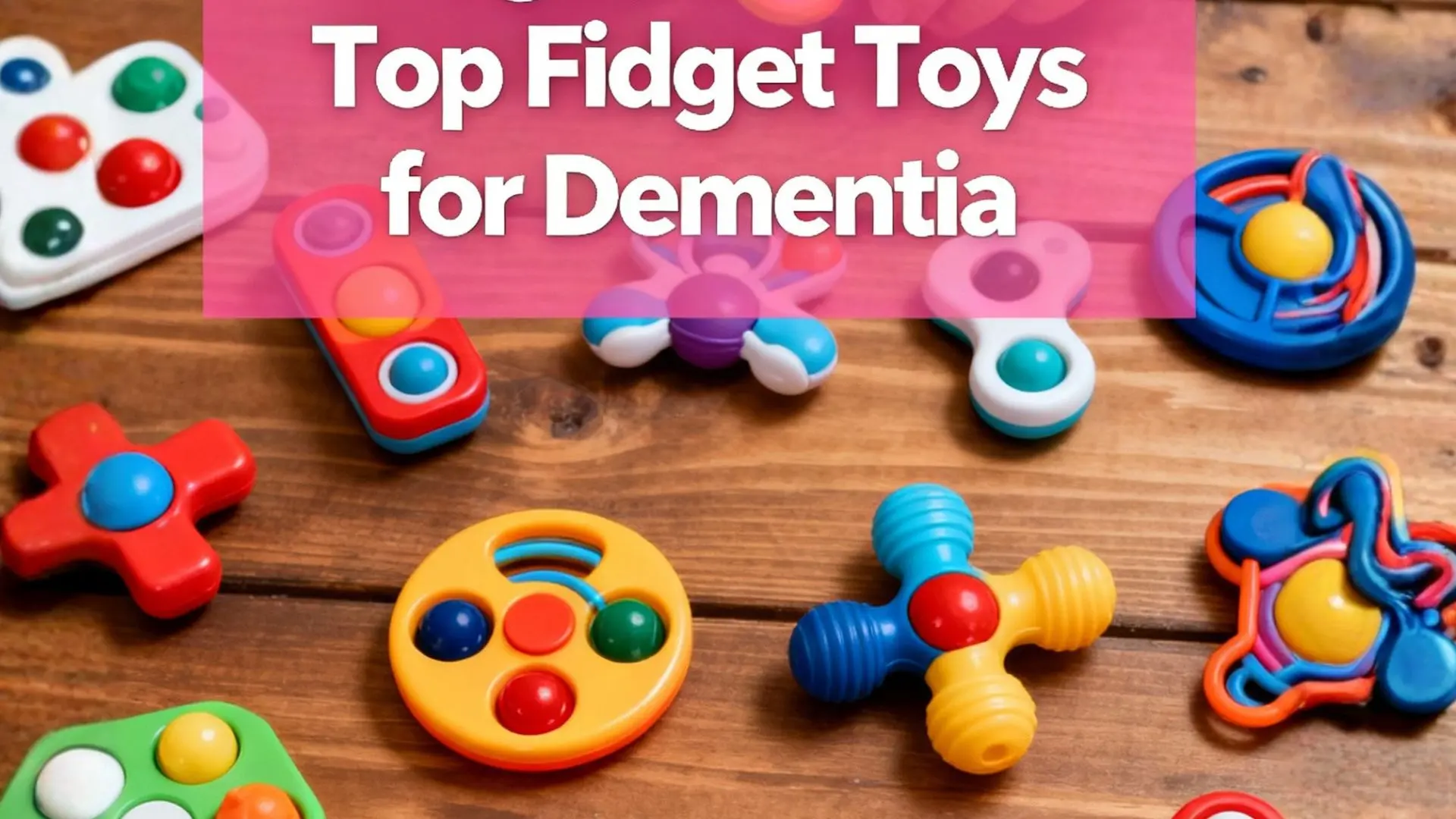
I found that giving hands something to do when activity or crafts weren’t possible worked. So I brought in fidget toys, and different ones worked when others didn’t. It depends on your loved one. So in this article I share 10 Fidget Toy for Dementia that can really help.
This post may contain affiliate links. If you buy through them, I may earn a small commission at no extra cost to you. See our Privacy Policy for details.

Why Fidget Toys Can Make a Difference
Restlessness is common in dementia. Many people reach for familiar actions such as folding, turning, or rubbing. Fidget toys give the hands something to do and the mind something gentle to follow.
They can
• reduce agitation and restlessness
• help focus attention during quiet times
• bring back comforting, repetitive motions
• create calm through texture and movement
The best approach is to try one item at a time. Watch closely and see what brings calm or interest. What works today may not work tomorrow, and that’s fine. I have a draw full of different toys and gadgets that I used to use!
1. Prayer Beads
Prayer beads can be surprisingly effective. Moving one bead at a time through the fingers offers a soothing rhythm that slows breathing and encourages focus. Even without religious meaning, the texture and repetition help calm the mind and for those, like us with a religious meaning it means even more!
• Choose large wooden or silicone beads that are easy to clean.
• Familiar styles from a person’s background often feel reassuring.
• Keep them within reach during quiet moments or car rides.
I’ve seen my mum become visibly calmer just from the steady motion of counting the beads between their fingers.
2. Tangle Toys
Tangle toys twist and turn endlessly. The smooth motion gives the hands something to do without needing much strength or coordination.
• They’re light and easy to hold.
• Soft versions work best for weaker hands.
• The quiet clicking sound can be relaxing.
They’re especially good when used during waiting times when restlessness would start to build.
3. Squeeze Balls
Squeeze balls offer simple, repetitive pressure that relaxes muscles and eases tension.
• Keep several with different textures such as foam, gel, or fabric.
• Match firmness to grip strength.
• Wash regularly for hygiene.
Afternoon times were when I found them most useful. The slow squeeze and release seemed to help settle nerves before bed. And they’re great for loved ones with arthritic problems and it helps keep movement in the fingers.
4. Infinity Cubes
Infinity cubes fold and unfold smoothly, creating an endless pattern that can hold attention.
• Good for maintaining focus during television or music.
• Look for quiet designs without sharp corners.
• Use when fine motor skills are still fairly steady.
The repetitive folding helps to calm wandering thoughts and bring structure to an unsteady moment.
5. Fidget Spinners
Fidget spinners are easy to use and can feel soothing through their smooth, balanced motion.
• Weighted spinners feel more grounding.
• Avoid flashing lights or noise.
• Choose one that spins easily with minimal effort.
That small, predictable motion can provide something steady to hold onto during confusion or agitation.
6. Busy Cubes and Activity Boards
Busy cubes and activity boards combine buttons, switches, locks, and zippers in one place. They encourage safe, familiar motions and can fill long afternoons with gentle activity.
• Keep parts large and sturdy.
• Match textures to past interests or jobs.
• Use at a table or lap tray to avoid strain.
These have given a sense of purpose and kept hands busy in a satisfying way.
7. Soft Stuffed Animals with Texture
Soft stuff animals can be more powerful than they seem. Many now come with textured fabrics, crinkly sections, or light scents. They offer both tactile and emotional comfort. I had an old teddy bear for mum we named him Harold, and he was always on her bed with her.
• Choose washable and hypoallergenic materials.
• Weighted versions can calm agitation.
• Add a drop of lavender oil if scent is soothing.
A soft toy to hold or stroke can ease moments of confusion or help with sleep.
8. Sensory Bottle
Sensory bottle filled with glitter, beads, or coloured liquid bring calm through movement and sound.
• Choose bottles that are clear, remove any labels and have tight lids.
• Pair with gentle background music.
The slow swirl of colour can capture attention and reduce restlessness, especially for someone with limited mobility. Also you can you make your own, we did, they’re very easy to make and you can fill it with whatever works for you (we used half oil half water mixture)
9. Marble Mazes
Fabric marble mazes have one marble sewn inside stitched pathways. The motion of guiding it through by touch helps concentration and fine motor control.
• The soft resistance feels satisfying and safe.
• Use during quiet times or while waiting for meals.
• Larger marbles are easier for weaker hands.
It’s a simple way to occupy hands that might otherwise pull or tap.
10. Twiddle Muffs
Twiddle muffs are knitted sleeves decorated with small textures such as ribbons or beads. They’re warm, soft, and always within reach.
• Ideal for cold weather or wheelchair users.
• Check all attachments are secure.
• Make your own using soft yarn and strong stitching.
In later stages of dementia, a twiddle muff can bring visible calm when words no longer do. The gentle movement and warmth can help replace anxiety with comfort.
A Few Gentle Tips
• Try one item at a time and observe carefully.
• If something causes irritation, quietly remove it.
• Prioritise safety with non-toxic, washable materials.
• Keep a small selection in common areas for easy access.
• Match textures and movements to what once felt familiar.
I learned to use different toys at different times of day. Something soft and quiet for the evening, something a bit more engaging during the day. These small routines helped when other things didn’t work.
Finding What Works
The right fidget toy can turn nervous energy into calm focus. It’s not about gadgets but about small, human comforts. Texture, movement, rhythm, and familiarity all play their part.
Sometimes it’s a simple bead. Sometimes it’s a small cube or a piece of soft fabric whatever works for you, there is nothing wrong in using fidget toys for dementia that helps your loved ones. If I anyone preaches to you about using these toys, don’t let them!