

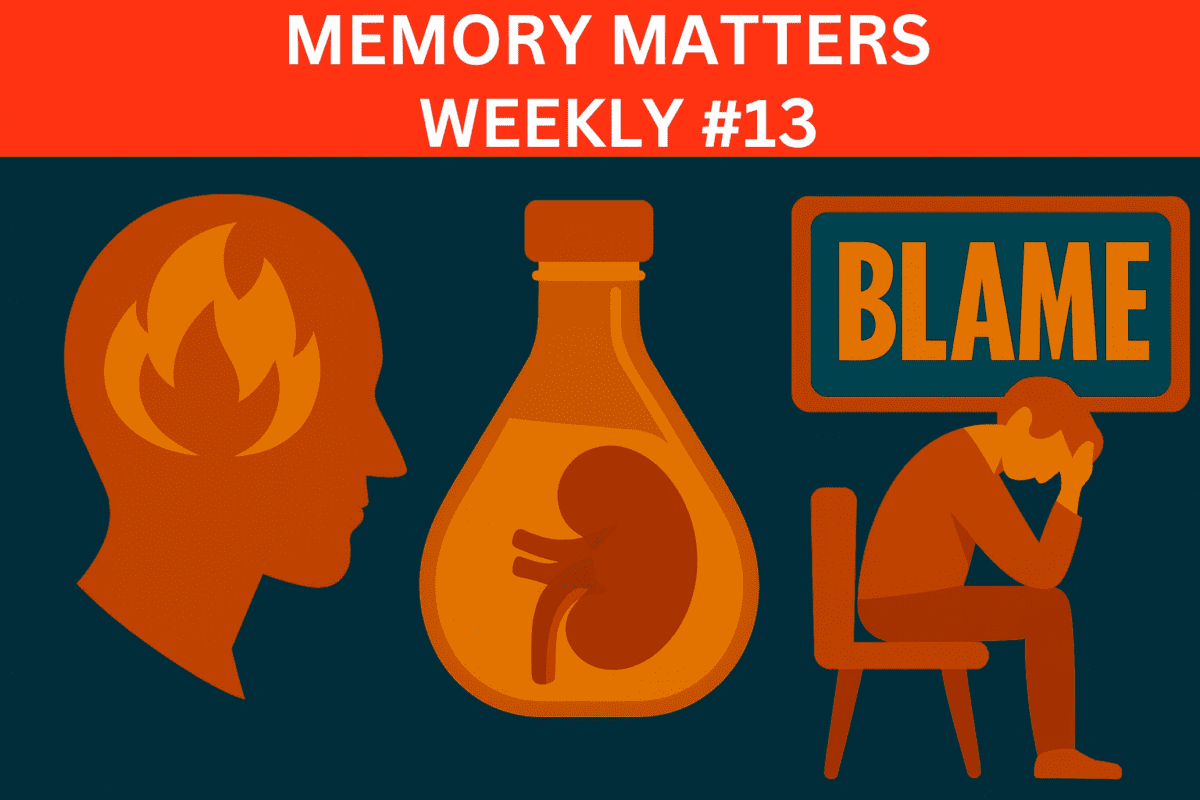
New dementia findings this week in this week’s Memory Matters Weekly #13: a key brain enzyme linked to neuron loss, kidney health affecting Alzheimer’s blood tests, and fresh outrage over the Carer’s Allowance scandal.
Published Monday, 8 December -Issue #13
3 Quick Bites: Last Week in Dementia News
This first story isn’t about dementia news, but caregiver news which I also include in this weekly newsletter. We’re just celebrating our first 3 months of publications so I’m saddened and angry to read this story. I have followed the Carer’s Allowance scandal from the beginning and this senior DWP civil servants horrible comments makes my blood boil. If you followed the Carers Allowance story you’ll understand.
Senior DWP civil servant blames victims for carer’s allowance scandal
The Guardian • 7 Dec 2025 • Read it here
Story:
A senior DWP civil servant, Neil Couling, has sparked anger after claiming carers were responsible for the Carer’s Allowance (CA) overpayment scandal. His comments directly contradict the Sayce Inquiry, published last week, which found the fault lay with system failures, not carers. People weren’t told for years when salary fluctuations resulted in them going over by just 1p on earnings threshold which meant they had to repay EVERY penny of CA payments (there’s no tapering scheme). Thousands were pushed into debt because rules were unclear and warnings were never given, criminalising carers, you can read their stories here
Why it matters:
Unpaid carers already manage huge pressure. Being blamed again, after an inquiry finally recognised they were not at fault, feels like a step backwards for trust and fairness.
My take:
I’m really pissed, this was a scandal and to read a senior DWP figure ignores the evidence and points the finger at carers. The inquiry made it clear: the system failed them. Carers deserved clarity and support, not blame. My hope is that the reforms move ahead quickly so carers finally see real change.
Poor kidney health linked to higher levels of Alzheimer’s biomarkers in blood
Eurekalert • 3 Dec 2025 • Read it here
Story:
A new study of more than 2,200 older adults found that people with reduced kidney function often show higher Alzheimer’s-related proteins in their blood, even when they don’t have dementia. The kidneys help clear these proteins, so when they’re not working well, the blood can look “Alzheimer’s-positive” even if the brain isn’t changing.
Why it matters:
Blood tests for Alzheimer’s are becoming more common. This study suggests they may be less reliable in people with kidney problems, leading to unnecessary worry or unclear results. Doctors may need to check kidney health before interpreting biomarker tests.
My take:
With the rise in research and use of blood test for dementia, it raises questions about how we interpret early detection tools. A worrying result might reflect kidney issues rather than early dementia. For caregivers, it reinforces something simple but important: always look at the whole person, not just one test.
Single enzyme failure found to drive neuron loss in dementia
MedicalXpress • 4 Dec 2025 • Read it here
Story:
Scientists have identified a protective enzyme in the brain, GPX4, that works like a tiny fire extinguisher inside each neuron. Its job is to put out small sparks of damage. When it fails, those sparks spread and the cell’s membrane breaks down. Using lab-grown human neurons and mouse models, researchers showed this process, called ferroptosis, can directly trigger the kind of neuron loss seen in dementia.
Why it matters:
Most dementia research focuses on plaques and tangles. This study highlights a different pathway, suggesting some forms of neurodegeneration may start with cells losing their ability to protect themselves from stress and inflammation. It opens new possibilities for prevention and treatment.
My take:
It’s early research, based mainly on lab and animal work, but it widens the lens on what might drive dementia. Not every brain change comes from plaques, sometimes it’s the cell’s own defences collapsing. Studies like this shows us how many different threads researchers are following to move us closer to understanding the disease.