
New dementia insights in Memory Matters Weekly #17: why stigma delays care, how obesity and blood pressure raise dementia risk, and whether a finger-prick blood test could spot Alzheimer’s earlier.
Published 26 January 2026 -Issue #17
3 Quick Bites: Last Week in Dementia News
Stigma still blocks dementia conversations and may slow progress
Read them here: Hospital News • Jan 2026 & The Conversation • 21 Jan 2026
Story:
A Canadian poll by the Alzheimer Society of Canada found that more than half of adults worry about developing dementia, yet many still won’t talk about it or seek help. Fear, stigma, and uncertainty continue to keep people silent. Two-thirds fear losing independence or becoming a burden, and nearly half say they wouldn’t know where to turn if dementia became a concern.
This sits alongside an article in The Conversation this week by Dr Saskia Sivananthan, who notes that dementia stigma today looks a lot like how cancer was talked about 50 years ago. For dementia, she argues, diagnosis is often avoided, (reflected in the Canadian poll where one in four people say they’d rather not know), because there isn’t yet a “cure.” But history shows that tackling stigma openly, like cancer advocates once did, actually brings better funding, earlier diagnosis, and eventually, bigger breakthroughs.
Why it matters:
For caregivers, this may sound familiar, that struggle to get a dementia diagnosis? Stigma keeps families in the dark and stops them from accessing services, support, or even just basic information that could make daily life easier. An early diagnosis can lead to concrete help, lifestyle changes, new therapies, and support & guidance.
The historical lens on cancer reminds us of a path forward: back then, silence around cancer delayed progress, but coordinated advocacy, public campaigns, and system changes shifted attitudes, funding, and outcomes. The same could be true for dementia.
My take:
Facing dementia is frightening, but facing it alone is worse. Silence doesn’t protect families, it isolates them. Cultural stigma kept me quiet for longer than it should have.
The Canadian data shows that fear and stigma still holds people back from talking openly or finding help. The comparison to cancer’s past stigma reminds us that norms and language shape how people act. If we want earlier diagnosis, better care, and systems that actually work, we need to treat stigma as a real barrier, not a side issue.
Obesity and high blood pressure may directly cause higher dementia risk
The Journal of Clinical Endocrinology & Metabolism • 22 Jan 2026 Read it here:
Story:
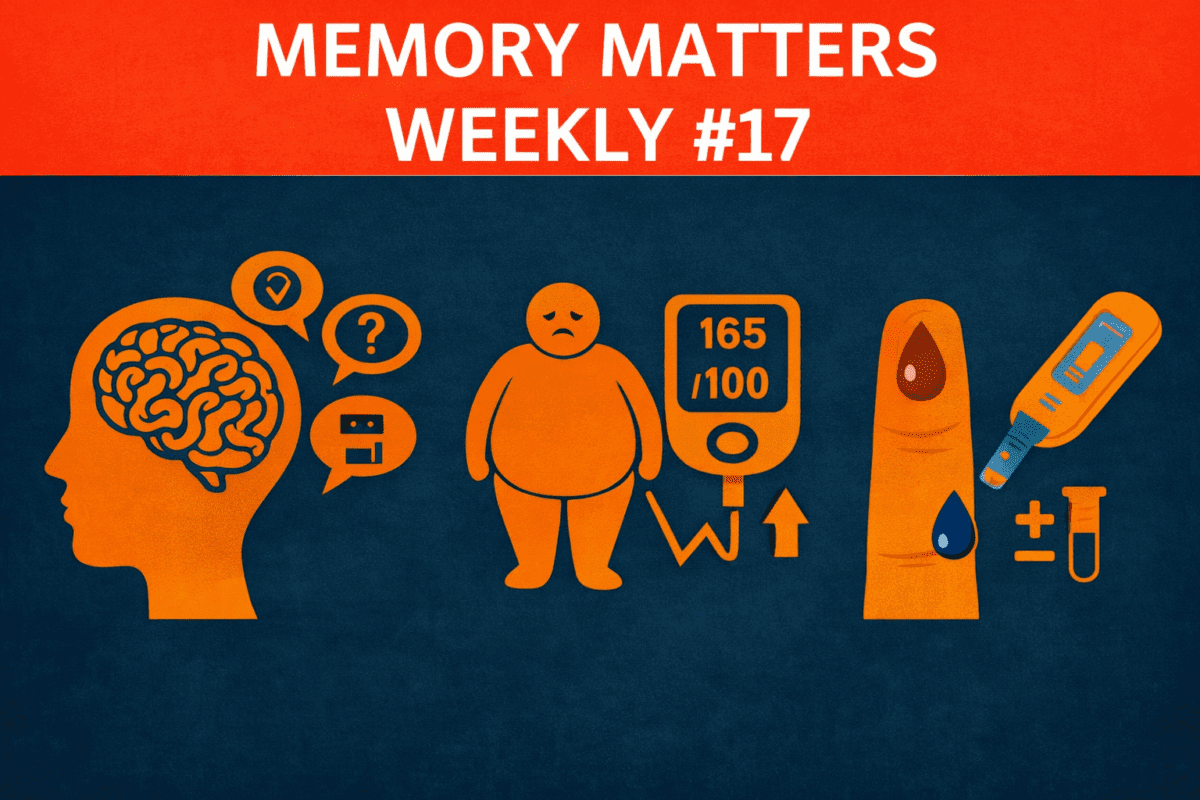
A large new study has found that higher body mass index (BMI) and high blood pressure aren’t just associated with dementia, they appear to be direct causal factors, especially for vascular dementia
Using a method called Mendelian randomisation, researchers analysed data from people in Denmark and the UK to mimic the conditions of a randomized trial and showed that elevated BMI increases the likelihood of developing dementia by roughly 50–60%, with much of that effect explained by blood pressure damage to brain vessels.
Ruth Frikke-Schmidt, MD, PhD notes: “This study shows that high body weight and high blood pressure are not just warning signs, but direct causes of dementia. That makes them highly actionable targets for prevention.” The authors say treating and preventing obesity and high blood pressure could be a real dementia prevention opportunity.
Why it matters:
We often hear “what’s good for the heart is good for the brain.” This study goes further, suggesting that obesity and hypertension actively drive dementia risk over time. That means prevention isn’t abstract, if obesity and hypertension cause damage over decades, then early action could tilt risk in a meaningful way across populations.
My take:
For caregivers and families, this means that prevention strategies that target these factors early in life may significantly reduce dementia risk. Early-life intervention, through healthy weight maintenance, diet, exercise, and blood pressure control, offers a chance to protect against dementia, particularly vascular dementia. It reinforces the idea that dementia prevention starts long before symptoms appear. But it also highlights inequality. You can’t reduce risk if you can’t afford healthy food, don’t have the ability to be active, or don’t know your blood pressure is high. Real prevention has to address those gaps.
New Alzheimer’s test uses simple finger-prick blood sample
BBC News • 19 Jan 2026 Read it here:
Story:
Imagine spotting Alzheimer’s risk with a quick finger prick, similar to checking blood sugar. An international study involving 1,000 people over 60 in the UK, US, and Canada is testing whether a tiny drop of blood can detect three proteins linked to Alzheimer’s, potentially up to 15 years before symptoms appear.
The test looks for markers including pTau217, GFAP, and NfL, which reflect early brain changes. Unlike current diagnostics that rely on spinal taps or specialist scans, this approach could be quicker, less invasive, and far more accessible. The trial is ongoing, with results expected by 2028.
Why it matters:
Current Alzheimer’s diagnostics are expensive, invasive, and limited to specialist settings. A reliable finger-prick test could allow earlier assessment in GP surgeries or community clinics, and make research participation easier for people who avoid hospital-based testing. Early detection matters most when treatments and support are still effective.
My take:
If this finger-prick test works, it could mean getting answers faster, without dragging our loved ones to hospitals for scary procedures. But early detection only helps if it’s paired with clear pathways for support, counselling, and follow-up care. We also don’t yet know whether the test will work equally well across all backgrounds.
What This Week’s Stories Tell Us
Taken together, these stories show how dementia isn’t shaped by one moment -silence delays support, risks accumulates through lifestyle choices and its made worse with the lack of access to everyday systems like healthcare, housing, and food.
Progress isn’t just about better science. It’s about whether we’re willing to talk earlier, act earlier, and build support that actually meets people where they are.