

Published Monday, 1 December -Issue #12
3 Quick Bites: Last Week in Dementia News
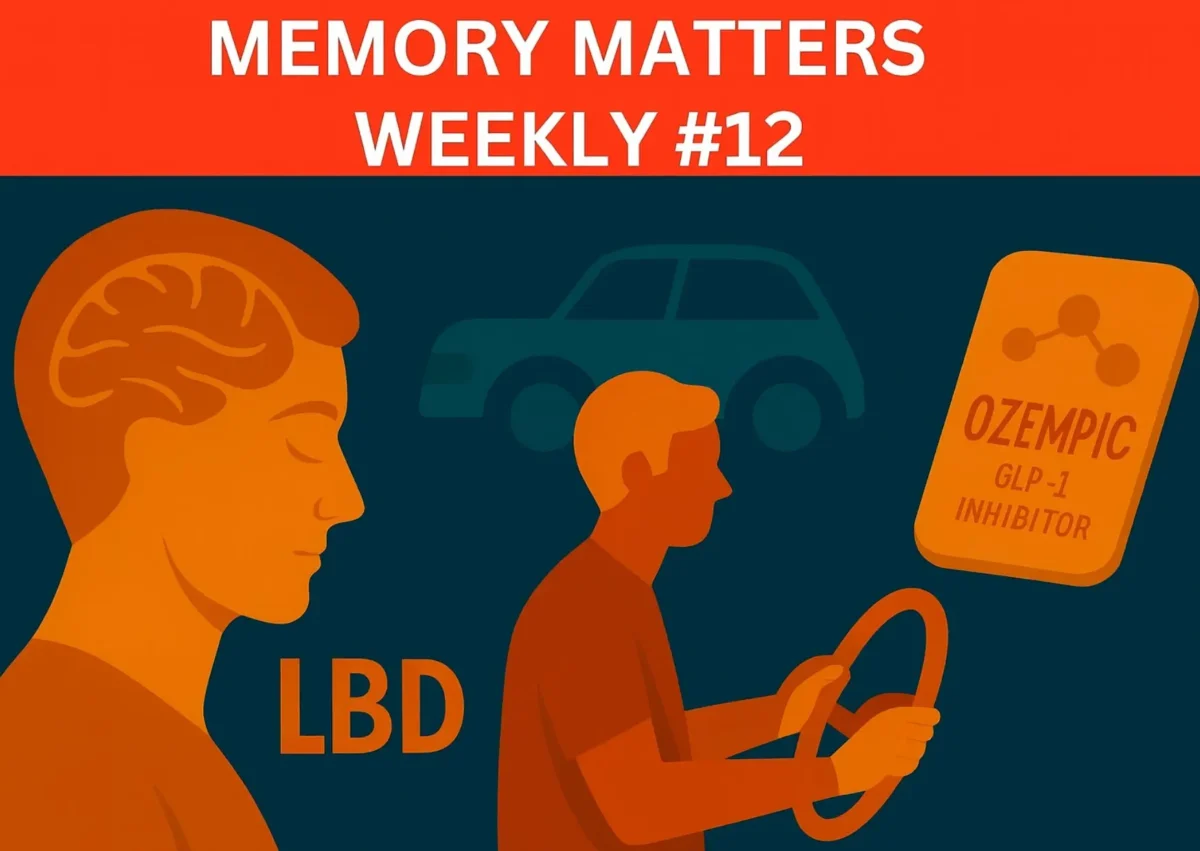
Driving patterns may help detect early cognitive decline
Neuroscience News • 29 Nov 2025 • Read it here
Story:
A new study tracked everyday driving behaviour of nearly 300 older adults over several years, using GPS data loggers in their cars. At first, driving habits looked the same for everyone, but over time, those with mild cognitive impairment (MCI) drove less often each month, avoided night driving, and stuck to simpler, less varied routes compared to other drivers.
Why it matters?
These changes often appeared before diagnosis. They found by using machine learning, GPS tracking of driving patterns can predict early cognitive decline with a high accuracy (87%), often years before symptoms show. For families who notice subtle changes but aren’t sure what they mean, this could become a practical early-warning sign, long before memory tests show anything.
My take:
There are important ethical questions here. GPS tracking raises concerns around consent, privacy and independence, especially when safety comes into the conversation. The study also focused on a narrow group, (mostly white, highly educated), so we don’t yet know if it applies to everyone. But it reflects something many caregivers already see: small behaviour changes often appear before anyone is ready to talk about decline. It may serve a real purpose in guiding a loved one to talk about changes in their health and to seek support or evaluation sooner, maybe before safety becomes a concern.
New Biomarkers Could Improve Diagnosis of Lewy Body Dementia
University College London (UCL) • 27 Nov 2025 • Read it here
Story:
Researchers are developing new tools to detect dementia with Lewy bodies (LBD) earlier and more accurately. They’re focusing on biomarkers, including a protein called α-synuclein,that may show up in spinal fluid or advanced brain scans, sometimes before symptoms become clear. These tools could also help separate LBD from Alzheimer’s or Parkinson’s, which currently isn’t easy to do.
Why it matters?
LBD is often misdiagnosed or diagnosed late, because its symptoms, memory issues, visual hallucinations, movement changes, overlap with Alzheimer’s and Parkinson’s. Spotting the disease earlier means doctors might be able to step in sooner with strategies to manage it, especially as these biomarkers can also track how things are progressing over time. While there are still challenges, like the fact that LBD can vary so much from person to person and tests aren’t fully standardized yet, the progress is promising. They’re even using these tools in clinical trials to create personalised treatment plans, which could lead to better care for our loved ones.
My take:
I know, delayed or incorrect diagnosis causes confusion, misdirected treatment, and emotional stress. A reliable test for Lewy Body Dementia would mean better support and care for our loved ones down the line as long as they’re not invasive or painful. Dealing with LBD is tough enough without the uncertainty of not knowing what’s coming next, and anything that gives a clearer picture I think should be welcomed.
Obesity jab drug fails to slow Alzheimer’s
BBC News • 24 Nov 2025 • Read it here
Story:
Two major Phase III trials recently tested whether semaglutide in pill form, (more commonly known to us as Ozempic or Wegovy) could slow cognitive decline in people with early Alzheimer’s disease. The trials enrolled around 3,800 participants with mild cognitive impairment or early dementia who also had biomarkers linked to Alzheimer’s. The results weren’t what they hoped, symptoms progressed at the same rate in both treatment and placebo groups, with no improvement in memory, thinking or daily function.
Why it Matters?
It might have failed to improve cognitive functions but it did make researchers rethink how the drug might be used as a preventive treatment, for dementia types linked to vascular health. If it can help reduce risk by improving heart health, diabetes or obesity, it may still play a meaningful role.
My Take
I’m intrigued that it changed some Alzheimer’s markers in the brain, even if it didn’t slow memory decline, which makes me wonder if it could still play a role combined with other treatments. I appreciate experts like Dr. Susan Kohlhaas from Alzheimer’s Research UK ,pushing for different ways to tackle this complex disease
“These trial results are another reminder that Alzheimer’s is driven by several different biological processes. No single approach is likely to be enough”
She’s right. It’s a reminder that every trial teaches us something and with over 130 Alzheimer’s drugs still in testing, there’s hope a multi-angle approach will bring us closer to finding something that prevents or slows cognitive decline.
Thank you for reading
Memory Matters Weekly aims to help caregivers, and families stay informed without the jargon. If you found this useful, feel free to share it.
See you next Monday.