
Simple meal organisation tips for dementia caregivers are about how you set yourself up for cooking meals. It’s about staying organised enough to keep food simple, safe, and ready when it’s needed. When you’re caring for someone with dementia, every decision takes energy, so having meals planned and half-prepared can make the day easier for both of you.
Below are the systems and small habits I used to keep the kitchen running smoothly.
Keep The Week Small And Repeatable
My first tip is to stop planning clever menus. I love to cook so did my mum, but on days where you’ve a lot going on like medical appointments or social appointments like singing for the brain, then time is too short to cook everyday.
I know that I won’t have time to cook lunch so I need to plan and the simpler the better.
I pick four base meals and rotate them. Roast chicken on Sunday turned into lentil curry soup on Tuesday. Minced beef became cottage pie, then soft pasta bolognese the next day.
I kept flavours simple. Cumin, garlic are staples in our house, but fresher tasting things like thyme, parsley, a little butter and chopped sun dried tomatoes can add so much flavour to a dish.
Pick four base meals and repeat.
- Keep flavours simple and predictable.
- Serve smaller portions more often.
Meal Prep Your Repeatable Meals
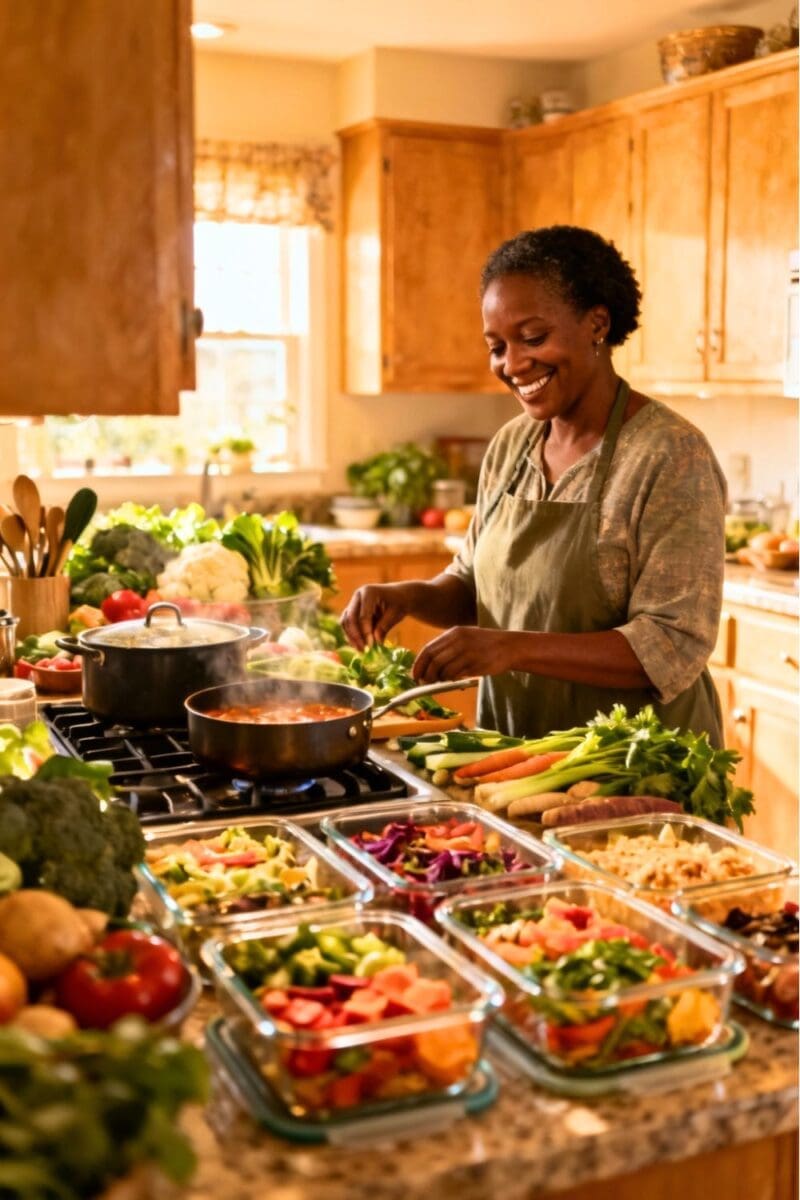
I treated prep like the foundations of my cooking week. Choose the best day for you to do it, that could be Sunday or mid week depending on your schedule. Vegetables were peeled and chopped and either turned into meals that day or prepped into individual containers to have easy cook meals all ready to go.
The most fun times were when mum could sit in the kitchen and help with the meal prep chopping, when her dementia advanced it became more instructional on how I should do it better, lol. Best times had in discussing what to cook, help whilst cooking and just being part of the process.
I cooked two pots at once, usually a soup and a stew. One pan meals are the easiest to make especially the roasted variety! While they cooked, I boiled eggs for snacks for the week, baked a tray of soft veg, chopped vegetables for pre-pack that could be tossed into any dish and used in slow cooked one pan meal.
I put everything in glass containers and stored in the fridge labelled for the week.
For prepped vegetables I used flat freezer bags to have them ready to be thrown in dishes or steamed to be added to dinners. Think quick stir fry meals for weeknight dinners, so much cheaper than buying those prepared bags from the supermarket.
You can have them all prepped to go in one bag of mixed vegetables or bags of different vegetables that you can choose from them. (Best thing is if you don’t get to finish it all up, just throw them in the freezer to use next week.
Soft Textures Are Consideration
Food texture is so important especially in later stages of dementia, skip this if not relevant for you. But chewing and swallowing may become more difficult.
So thing about how to make it easier to consume. I kept meat tender by slow cooking or mincing it (if you use a butcher like we did, ask them to double mince it for you, it makes such a difference).
Vegetables were roasted until they gave in easily to a fork. Or steam and boil and make into a puree, parsnip puree with garlic is a winner. I try to be all cheffy and make dramatic swirl on the bottom of plate and add soft cooked meat or fish in a sauce on top, yum!
I added moisture to almost everything. A splash of milk into mash. A ladle of stock into rice. Butter & stock on the vegetables.
Soups are a blessing. We love a chunky chicken soup, but as that got harder to eat, blending took over. I blended half the pot and stirred it back in so it stayed thick but not gloopy.
Puddings are great as well. Stewed apples with custard worked so well. And all I needed to do was precook stewed apples at the beginning of the week that could be added to custard, or porridge or to yoghurt for comfy desserts. You can check out some other great ideas for soft foods particularly for breakfast here
- Cook low and slow, or mince.
- Add moisture every time you reheat.
- Blend half the soup to balance texture.
Breakfasts That Were Ready to Go
I know how quick brekkie can be, it doesn’t get any easier than milk and cereal. But I wanted variety in our diet, some fruit, fibre, high protein meals. So I make meals ahead of time or make more than one portion to have over a few days.
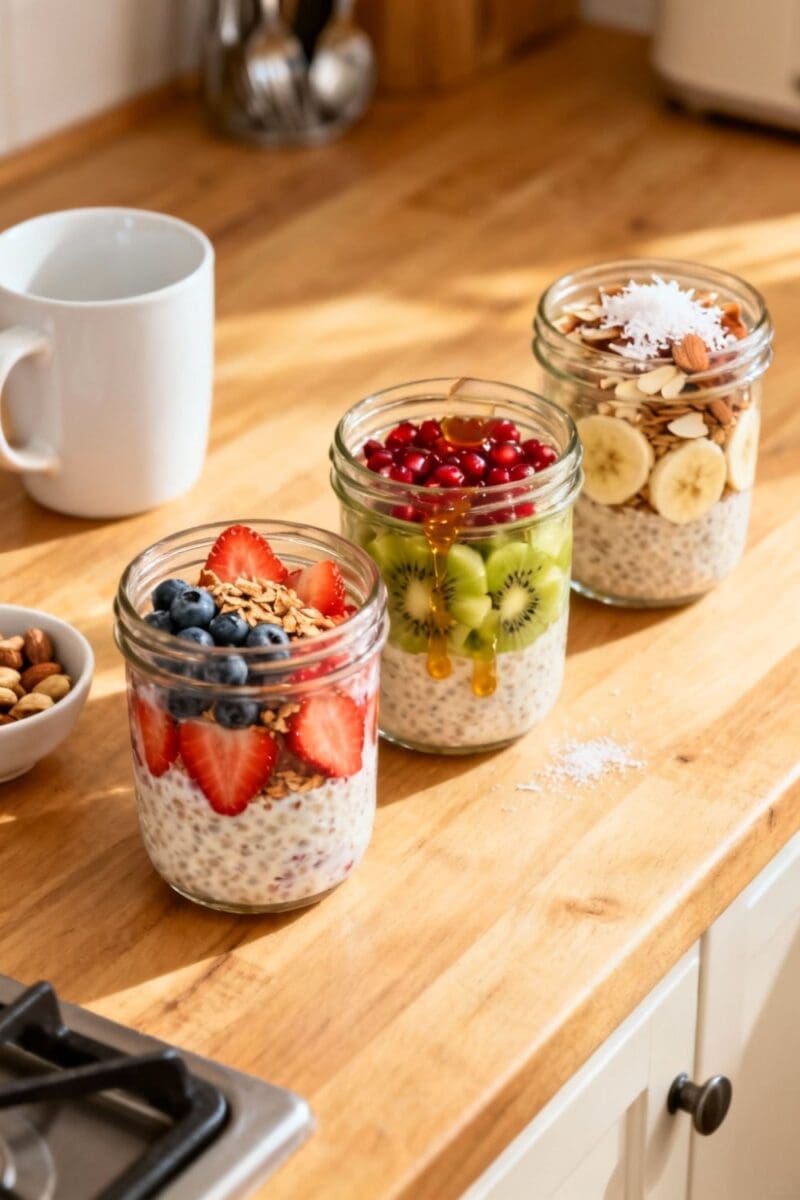
I set up overnight oats, you can get so many flavours from simple overnight oats, great for fibre and protein and just an overall well balanced start to your day.
Making a batch of stewed fruit and the beginning of the week that could be added to a simple pot of yoghurt and topped with some nuts and seeds (if swallowing wasn’t an issue).
Pancakes was always our love, so I could whip up a batch of pancakes in a few minutes because I prepped the batter the night before and had chopped up fruit ready to go! I tried cooking pancakes and reheating the next day, but they do taste dry, so batter mix in the fridge was a better option.
Finally whipping out a prepacked smoothie bag and adding a protein scoop and milk especially in the summer for a healthy start (and they don’t just have to be just for breakfast, sometimes we used them as a snack option during the day)
- Prepare oats, stewed fruit, and pancake batter ahead of time
- Be creative with your toppings and flavourings
- Freezer bag smoothies for quick nutritious breakfast
Finger Food For Easier Evenings
Finger food was great for maintaining independence when eating with cutlery was harder. I cut sandwiches into small squares. Omelette into strips, fruit chunks or segmented, chopped cubes of cheese to easily pick up.
Fish fingers, who ever invented them, love them. They’re such a comfort food, dunked in ketchup so easy to eat and enjoy on its on or in sandwiches.
The best thing about finger food is you can set it all up on a plate and your loved one can graze on it whenever they feel hungry. There’s no urgency in eating it, just bulk it up to make a complete meal.
The Freezer – Godsend!
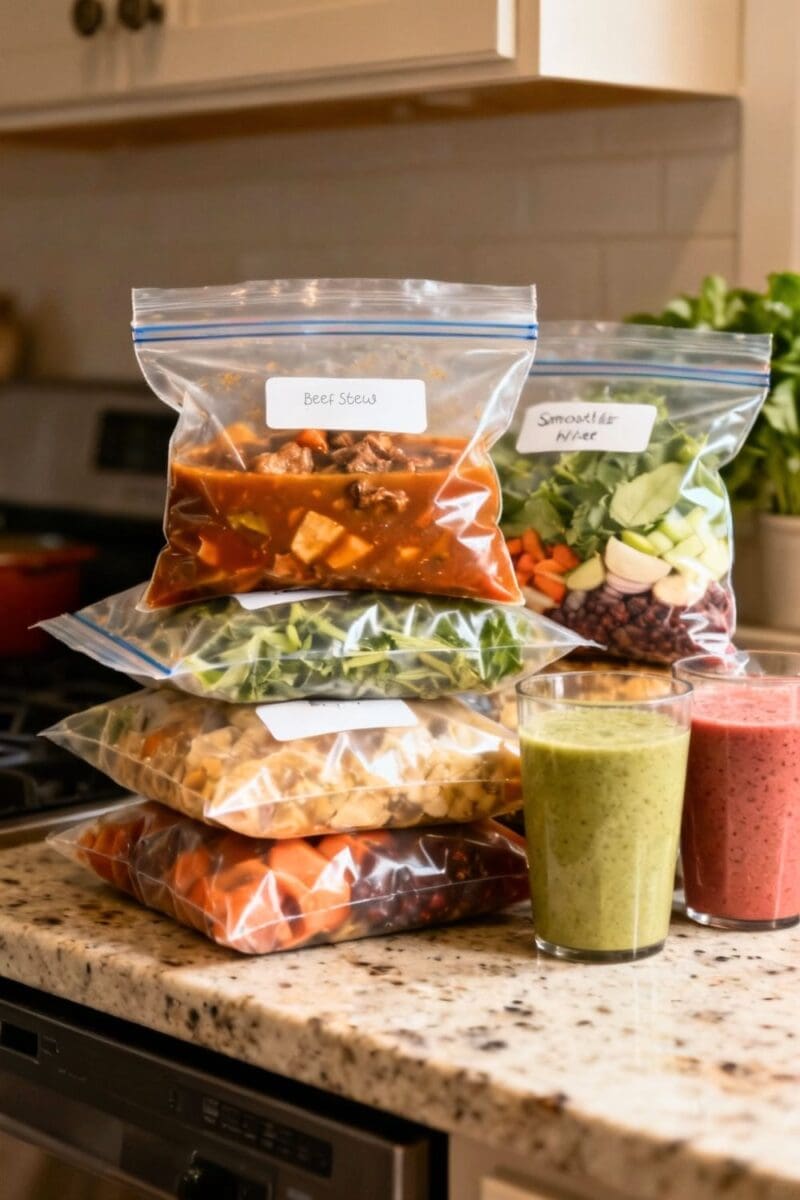
I love my freezer and I freeze everything. You can get great flat bags or use a vacuum suction machine so that bags save space and stack up like books. Each bag had a date and a use. Stew for dinner. Soup for lunch. Mash for anything.
Left over cooked sauces or sauces ready prepped to throw into a slow cooker with frozen marinated meat or fish portions. Prepacked smoothie bags of different vegetables and fruit were so easy to make.
I built a freezer habit. Every Sunday two new meals went in, and two old ones came out, so on meal prep day I wasn’t waiting for food to be cooked. I had that day all sorted all ready so that went on the stove first whilst I meal prepped the rest of the week.
I kept a list on the fridge door of what I had in the freezer, it stopped me from cooking a third chicken stew in a row because I forgot what we had.
- Freeze flat, label clearly, rotate weekly.
- Keep a simple door list of what is in there.
- Replace what you use
Cook Once Eat Twice
Lunch was repurposed supper. This is where cook once and eat twice comes in handy. If you can’t meal prep, then just double the batch of food your cooking.
Think of a gorgeous chicken curry and rice you just made, and you make double the portion size so that you have portion for the next day, and you know how much better anything marinated tastes the following day.
The only think is to make sure you cool down, and refrigerate leftover rice quickly.
- Turn last night’s dinner into today’s lunch.
- Reheat food gently and a splash of liquid to stop it drying out
Hydration And Snacks Prepped Like Meals
Don’t forget to think about hydration. I prepped drinks like food. A jug of diluted juice lived next to a lidded cup. Herbal tea bags sat by the kettle in a small pot. I set reminders on my phone, but the better reminder was putting cups where we sat. One by the sofa. One on the kitchen table. We even got a fantastic mug that had voice reminders to take a drink! Honestly!
Snacks earned a box of their own. Yoghurt, soft cheese triangles, peeled satsumas, banana halves wrapped in beeswax, chocolate squares for that sweet tooth. It all mattered because food on some days was difficult, so having snack options ready available made it more accessible
- Having jugs of different drinks around the house helps you know how much fluid been consumed
- Keep a snack box at eye level.
- Offer sips often, and reminders to drink
Make The Kitchen Do Some Of The Work
Having the right tools made life so much easier. One of the most basic things is having a knife sharpener. I’m telling you now but you might not realise how dull your knives have become until you try to chop a butternut squash.
Blenders for soups, sauces, marinades, god send, you can get a food processor that can do it all, chop, blends and slices so save on kitchen space. Or a cheaper option is a mini chopper and hand blender (for the soup) combo that are a great space saver as well.
My instant pot is my most multi use device, it slow cooks, its a pressure cooker for when I need something quick and you can cook meat from frozen. I know it shocked me as well, but great time saver!
And the best device is the air fryer for cooking small portions of food and for reheating – did you see that reheating button, it took me a while to realise it was there, and that’s great for reheating most things.
I have many other useful tools, but we’ll save the full list for another blog.
What I Actually Cooked Most Weeks
I rotated a simple set that never let me down.
Soup, usually chicken and veg, or carrot and lentil. Cottage pie with extra mash on top. Soft pasta bolognese made from the same mince as the pie. Fish pie with smoked haddock and peas. A tray of roasted root veg to blend into soups or mash into patties. Rice pudding for pudding or a late lunch when appetite vanished.
I spent a few hours on Sunday and midweek. That was it. The rest of the time I reheated and assembled.
- Build a core set of five repeatable meals. Then change them every month, look at seasonal cooking books to buy cheaper in season fruit and vegetables.
- Batch on Sunday, top up midweek.
- Reheat and assemble the rest of the time.
A Note On Safety
I cooled hot food fast by spreading it thin in a shallow dish or using a baking sheet especially to cool rice quickly. Flat packed food makes it easier to defrost quickly in cold water or left overnight in the fridge, but make sure to use it the same day you defrosted it.
I dated everything, thats where glass containers came in handy you can just write directly on them with glass pens and wash them off.
I reheated until piping, then let it cool before serving to avoid mum scolding herself on too hot food.
Conclusion
Having meals ready, or just knowing where to start, gives you space to focus on what really matters, spending time with your loved one. These simple meal organisation tips for dementia caregivers are what helped me, and I hope they help you too.