
Autumn is fast approaching, and every year, I had a fall preparations checklist that I go through to make sure everything is setup for the next season.
As a dementia caregiver for over 10 years, I’m sharing with you my fall preparation tips for caregivers with a FREE checklist.
It’s things that you think about but may forget to actually do. I liked having a simple checklist to remind me to get things done. I love a list to cross off!
Want my FREE Fall Preparation Checklist for Caregivers?
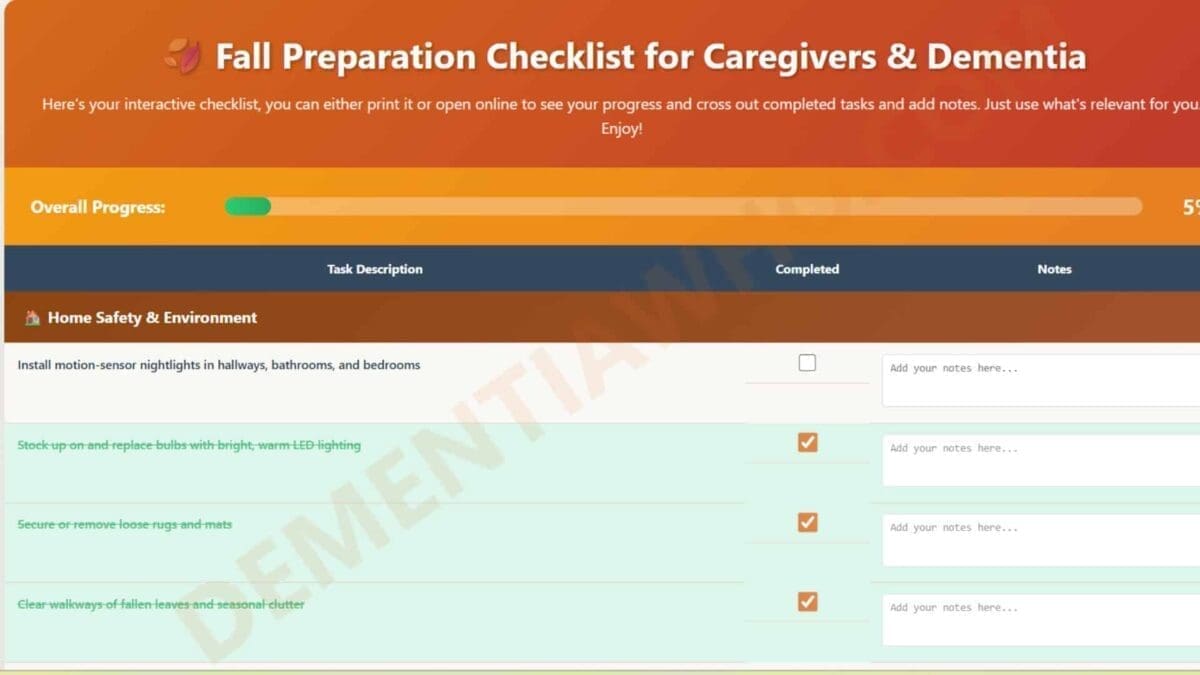
It’s a free, online interactive tool that can be printed too. It covers everything from home safety to dementia-specific tips for the season. Click here to grab it. It’s ready to use and covers everything and more from below in an interactive and printable checklist format including home safety, health, comfort, self-care, and dementia-specific tips.
Let me know if these fall preparation tips for caregivers are helpful, also make sure to get the FREE downloadable checklist that’ll help too!
Home Safety & Environment
Light isn’t just about seeing, it’s about orientation in time and space. Walk through your home and notice which spaces feel different and where more light is now needed before the sun completely sets.
Consider becoming aggressive about illumination. Timer switches that bring rooms to life before dusk arrives. A warm lamp positioned over areas of dark shadows on walls. Having pathway lighting that creates safe passage between rooms when evening falls.
- Install motion-sensor nightlights in hallways and bathrooms
- Replace dim bulbs with warm-toned LEDs
- Test smoke and carbon monoxide detectors
- Service the heating or boiler and bleed radiators
- Seal any drafts around windows and doors
- Closing curtains & turning on lights before the darkness outside becomes obvious
- Clean doormats, install non slip mats
- Install grab bars near entryways if needed
- Ensure the front and back entrances are all well lit to avoid falls and slips
Fall Preparation Tips for Caregivers: Health & Wellness
Autumn is when I’d check everything was in place before winter really arrived. A flu jab booked early meant no last-minute scrambles. Fresh bedding and layers were ready before the cold crept in, so I wasn’t digging through cupboards at 9 pm. Think about:-
- Scheduling flu shots for you and your loved one
- Plan refill prescriptions with essential dates in mind and avoid the holiday rush
- Check electric blankets for any faults
- Wash and prepare thicker bedding while the weather is warm to air and dry them
- Stocking up on tissues, electrolytes, paracetamol, cough & cold medicines
- Keep hand cream and lip balm handy for dry indoor air
- Know whether your essential health equipment still works! Having a thermometer is a godsend.
- Check with doctor about upping your Vit D supplements
Physical Comforts
Autumn weather is unpredictable. It shifts quickly from mild to damp and cold. I noticed Mum’s movement slowed on colder days, and her hands felt colder even when the heating was on. She definitely felt it in her joints and reduced movements contributed to the feeling of being cold.
Think of warmth as a tool you deploy strategically rather than a comfort you add when someone complains. Front-opening cardigans that slide on without disrupting routines. Circulation aids like soft leg warmers that work while sitting. Socks chosen for grip and fit, not just warmth. Leg warmers can be used not just on your legs, we used them on mum’s hands as well, as her hands were always freezing. We invested in a lot of fingerless gloves as well.
- All our throws and blankets were washed & folded and placed where they were easy to grab
- Purchase non-slip slippers and shoes with good traction
- Wash or buy leg warmers, fingerless gloves and shawls/scarves
- Wash and prep heavier winter bedding (duvets, blankets etc)
Nutrition & Hydration
There’s something comforting about a pot of soup on the stove in October. On days when energy was low or plans changed, I was also grateful for the freezer meals I’d set aside. Warm drinks became a little ritual that helped Mum feel settled and me feel prepared.
Get Prepared Ahead of Time
- Prep nutritious freezer meals for days when plans change
- Keep a Thermos of soups or warm drinks ready to go
- Offer warm drinks like herbal tea, hot chocolate, or infused waters
- Watch for signs of dehydration with heated indoor air
Reduce Sundowning by Planning the Late Afternoon Carefully
By mid-autumn, I noticed that Mum became more unsettled in the late afternoon. It was increased repetition, sometimes frustration and more confusion and anxiety. It’s what’s defined as sundowning. And it became worse once the clocks changed.
Consider creating what feels less like a routine and more like a sanctuary that begins around 3pm. Warm drinks that comfort rather than stimulate, tea with familiar rituals, or spiced milk that carries the scent of security.
Music that flows without sudden changes or jarring transitions. Visual comfort in the form of photo albums that give gentle recognition rather than demanding recall. Here’s what I added to our routine:
- A familiar, quiet structure starting around 3pm
- Warm drinks like tea or chai tea. Turmeric tea was also helpful (but careful no contradictions with any medications you take)
- Soft music or instrumental playlists
- Memory books or gentle photo albums
- A comforting film or series with a predictable tone (nothing fast-paced or dramatic)
- A blanket nearby that she always used
- Avoided news programmes, loud television etc
- Calming room scents, like lavender spray
- Investing in a light therapy lamp to reduce SAD symptoms
- Adapt your communication styles to provide reassurance and comfort
Sundowning didn’t disappear, sometimes nothing worked but it stopped taking over the entire evening. Planning ahead meant I was calmer too and that changed the tone of the whole house.
Plan for Halloween Whether You Celebrate or Not
Halloween arrives every year, yet somehow many caregivers are caught unprepared by the evening of constant doorbell rings, unfamiliar voices, and masked faces at windows. If your person struggles with unexpected visitors or becomes frightened by costumes, this night requires strategy.
A polite sign explaining your household needs quiet can reduce interruptions. Drawing curtains before trick-or-treaters emerge protects against confusing visual stimuli. If you want to acknowledge the season, create contained indoor activities that feel festive without involving strangers at your door.
What I now plan each October:
- I hang a simple sign for the door: “No Trick or Treating”
- I close the curtains early and make sure indoor lighting is warm and steady
- Have a quiet room ready in the back with headphones, movies, music picked out and ready
- I keep soft, seasonal activities on hand: baking spiced biscuits, painting pumpkins, & arts and crafts. Read this post for more Halloween activity ideas
Even if you do want to celebrate, choose what works for your loved one.
For more ideas check out this post on 13 Halloween Safety Tips for Dementia, it includes a FREE downloadable no trick or treat poster that you can print out for your door!
Self Care – Don’t Forget Yourself this Fall
Autumn was when I started to wobble. Fall is so beautiful with the lights and colours of fall, but there’s the otherside as a caregiver. Less daylight, more isolation, and the pressure of the upcoming holidays made everything feel bigger. Consider autumn your last chance to create intentional space before the year ends. This might mean identifying one commitment you can decline, one small daily rest you can protect, or one task you can postpone until after the holidays.
So write down things like quick meal solutions that require minimal preparation, jobs that can genuinely wait until January and finding one person you can contact just to talk about something other than caregiving responsibilities.
So I wrote down:
- One thing I would say no to this month
- One afternoon I would claim for myself, even if it was just sitting still with a cuppa
- A list of meals I could throw together in ten minutes or setting time aside to do some meal prep
- One task I could delay until January
- Someone I could check in with, just for me that one person I would contact just to say hello
Final Thought
None of this preparation guarantees smooth sailing through autumn. The person you care for will still have difficult days, as will you.
You will still feel overwhelmed sometimes. Unexpected challenges will still arrive at inconvenient moments.
But you’ll be more prepared to handle them using these fall preparation tips for caregivers & dementia.
So get the FREE full printable guide of our Fall Preparation Checklist for Caregivers & Dementia which has much more information in a trackable, interactive format. Download it now! Let me know if you found them helpful!