
Memory Matters Weekly #21 reminds us that progress in dementia happens at every scale, from the way we support someone’s hearing in a care home, to the medicines already sitting in GP surgeries, to the quiet act of one person saying yes to a research study.
Published 23 February 2026 -Issue #21
3 Quick Bites: Last Week in Dementia News
Five Reasons to Take Part in Dementia Research
Join Dementia Research – Feb 2026 • Read it
Story:
On its 11th anniversary, Join Dementia Research highlighted why getting involved in studies matters. This article five reasons why people living with dementia, or those who care for them, might consider getting involved in research studies. These include the hope of contributing to better treatments, taking an active role in understanding your own health, and the sense of community that many participants describe finding along the way.
Studies range from major clinical trials to simple surveys, focus groups, and online questionnaires. You don’t have to have a diagnosis to take part, many studies are looking for healthy volunteers, family carers, and people in the early stages too.
Why it matters
All the stories in these newsletters, like the drug repurposing research, the care home studies, the long-term brain training trials, depend on people saying yes to taking part. Without volunteers, there is no data. Without data, there are no answers. It really is that direct a connection.
If you’ve ever read one of these roundups and thought “I wish there was more I could do”, this is one answer. You can register at joindementiaresearch.nihr.ac.uk and see what studies are currently looking for people like you.
My take:
Stories like this remind us that science doesn’t happen in a vacuum. The research we cover every week relies on people volunteering their time and experience. I include this not as an advertisement but as a genuine part of the picture. The people who took part in the 20-year brain training study we covered last week? They started by just saying yes.
Research doesn’t happen to us, it happens because of us. And with more potential treatments in the pipeline than at any point in history, the need for people to take part has never been greater. Even completing a short survey from your sofa counts.
Piloting Hearing and Vision Support for Dementia in Long-Term Care
Nature – 16 Feb 2026 • Read it here
Story:
Researchers piloted something called the SENSE-Cog programme across nine care homes in Ireland. The idea was straightforward: what happens when staff are properly trained to spot hearing and vision problems, hearing aids are actually working and being worn, glasses are the right prescription, and the environment itself isn’t making things harder? They wanted to know whether it was even practical to deliver this kind of support in a care setting. It was.
We know that dementia affects how people think and remember, but this study reminds us that it also affects how people experience the world around them.
Why it matters:
Think of it this way: if you were trying to follow a conversation but couldn’t quite hear it, or trying to navigate a room when everything was blurry, you’d find it much harder to engage, communicate, or stay calm. For someone living with dementia, those same barriers can look like confusion, withdrawal, or distress, and get put down to the dementia rather than the hearing aid that stopped working last month.
This research is a reminder to check the basics. Is your loved one’s hearing aid in and turned on? Are their glasses up to date? Are the lights good enough? Sometimes the most powerful thing isn’t a new treatment, it’s making sure someone can actually see and hear the world they’re living in.
My take:
Clinical trials tailored to care settings are rare, so this type of research helps bridge the gap between controlled studies and real-world care. This was a pilot study, so it was testing whether the approach could work in practice rather than delivering big definitive results. The next step is a larger trial. But honestly, you don’t need to wait for that. The practical message is here right now, and it doesn’t cost anything to act on it. Hearing and vision difficulties are common in people living with dementia and can worsen communication, social engagement, and quality of life. It’s worth doing a quiet audit at home. Is the hearing aid in and switched on? Are the glasses clean and the right prescription still? Is there enough light?
Viagra and shingles vaccine show surprising promise against Alzheimer’s
Science Daily – 18 Feb 2026 • Read it here
Story:
Rather than trying to create something entirely new, scientists at the University of Exeter asked a different question: what if something we already have could help? Funded by Alzheimer’s Society, a panel of 21 experts from around the world went through 80 existing medicines to see whether any of them showed promise against Alzheimer’s disease. These were chosen because they have plausible mechanisms related to neurodegeneration, evidence of non-clinical efficacy, and are generally well tolerated in older adults.
The shingles vaccine Zostavax came out strongest, people who received it appear to be around 16% less likely to develop dementia, and because it already has a long safety record, it could be moved into proper clinical trials relatively quickly. Viagra (sildenafil) made the list because it seems to protect nerve cells and may reduce the build-up of harmful proteins linked to Alzheimer’s. And riluzole, a drug used in motor neurone disease, showed similar early promise.
Why it matters:
Developing a brand new drug from scratch takes 10 to 15 years and costs billions, and most of the time, it doesn’t work. Repurposing medicines we already know are safe is a smarter shortcut. It’s a bit like discovering that a tool you already own in the shed is perfect for a job you didn’t know it could do. These drugs still need proper clinical trials before anyone should change what they’re taking, nobody should start or stop any medication based on this research. But it opens a genuinely exciting door.
My take:
Please don’t run out and start taking Viagra or asking your GP about riluzole based on this. The headline is eye-catching, and understandably so. But it’s worth keeping expectations measured. This study identified candidates, it didn’t prove these drugs work against Alzheimer’s. The researchers themselves are clear that clinical trials are the essential next step. What’s encouraging is the momentum: more avenues than ever are being explored, and this is one more credible thread to follow.
This week
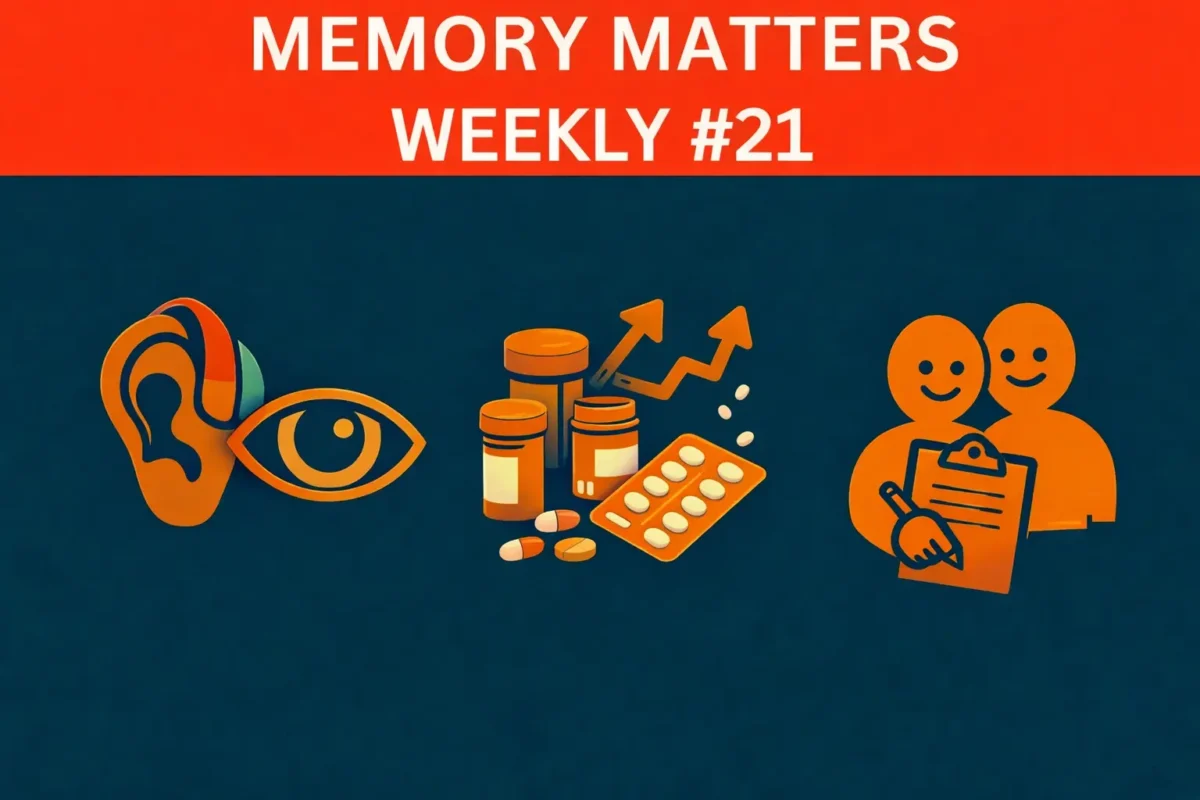
When I read these three stories together, I don’t see big headlines. I see steady effort.
I see someone in a care home checking whether a pair of glasses or a hearing aid might help a person feel less cut off from the room around them. I see researchers sitting with long lists of medicines, crossing some off, circling a few, asking carefully whether something already on the pharmacy shelf might help in a different way. I see ordinary people signing consent forms and turning up to appointments so that the data behind all of this actually exists.
There is still no cure. That hasn’t changed.
But what I do see is movement. Real people doing careful work. Families agreeing to take part in studies. Professionals trying to improve small parts of daily life while bigger questions are still being answered.