
I tried water painting with reusable books for dementia at the beginning of our painting journey when I wasn’t sure if mum would enjoy painting. Turned out that she did, loved it, but there were days when Mum didn’t have much energy and these books were perfect for those days. They’re easy to set up, calming, and mess-free and perfect quiet-time activities we both looked forward to.

Water painting with reusable books is exactly what it sounds like. You wet a paint brush with water or fill a water pen, swipe it across the page, and colours appear like magic. No paints, no prep, no stress. For someone living with dementia, it’s both sensory and soothing and for caregivers, it’s a relief to have something on hand that doesn’t involve clearing up splashes of paint afterwards.
I’d offer it as something she might like to do when mum had low energy but still need something to to. Here’s how I made the most of it.
Why Water Painting With Reusable Books Work So Well
There’s no right or wrong way to do them. That’s probably what made them so effective for us. Mum didn’t need to remember steps or instructions. Just brush and watch the colour appear. Even when words were hard, the movement of her hand and the surprise of the colour returning gave her something to focus on, and something to smile about.
It’s low-pressure. You don’t have to create anything from scratch, and there’s nothing to clean up afterwards. That alone made it a win for me. No worrying about where to set things up, or how to encourage her when she was tired or a little anxious. I could just pass her the book and brush, and sit beside her with a cuppa.
The colours fade once they dry, so the pages can be reused again and again. That repetition felt helpful, especially on days when short-term memory made everything feel new. Mum didn’t get bored of doing the same page more than once, in fact, she often seemed pleased when the colours came back, like she was rediscovering them each time.
Choosing the Right Type of Book
Some water painting books come with refillable water pens, while others are just simple individual cards or books you use with an ordinary paintbrush dipped in water. We tried both, and honestly, they each had their moments. The pen-style ones were more portable and less messy, but Mum sometimes preferred the feel of a proper brush in her hand. The key was keeping it easy and intuitive, no squeezing, no fiddly lids, just dip and paint.
You’ll want to look for ones with:
- Thick card (best for water absorption without falling apart)
- Large images with high-contrast outlines
- A refillable water brush or compatibility with a standard paintbrush
I avoided pages or books with characters or busy backgrounds, as they sometimes made Mum more confused. Nature-themed ones worked best for us — animals, trees, garden scenes — anything soft and predictable.
Adapting The Activity To Different Days
Some days, Mum was more alert and would paint each part carefully. Other times, she’d just swipe the water back and forth, and that was perfectly fine. The point wasn’t to stay within the lines, it was the gentle repetition, the texture of the brush on the page, and the sense of something happening as she moved.
When her grip wasn’t so strong, I’d fill the brush with warm water and hold it with her, or guide her hand loosely while she moved it. Even if she didn’t do it “independently,” she was still involved.
Making It Part Of A Calmer Afternoon
I often used this alongside other calming things — quiet music, a warm drink, or a gentle conversation. We had a few go-to afternoon activities we’d rotate between depending on energy and mood. This was one of them, along with other gentle sensory activities like finger painting with a kit I made at home.
It worked especially well when I needed to cook or take a phone call. I could set her up at the table, pass her the page /book and brush, and know she was occupied but not overwhelmed, and not have to worry about her eating the paint.
Recommended Products:
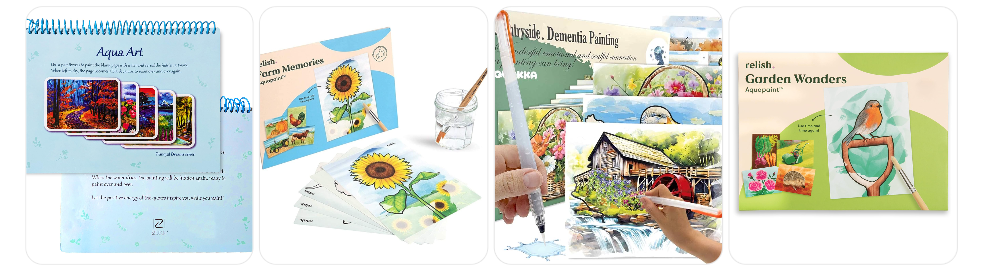
- ZUKI’s Aqua Art – Dementia Activities, Reusable Mess-Free Paint Book
This product offers reusable water painting pages tailored for dementia patients. View on Amazon - QUOKKA 10PACK Water Painting Dementia Activities for Seniors.
These come in a pack of 10 individual cards but with a water brush pen, that you fill up with water and then paint the picture. They offer several designs to choose from. View on Amazon - Relish – Dementia Aquapaints Activities – Pack of 5 Reusable Water Painting Cards
Relish are the most familiar aquapaint kit used in dementia care. They offer various art scenes sold as 5 pack reuseable water painting kits. View on Amazon
Keeping A Water Painting Kit Ready
I kept a little basket with everything we needed so I wasn’t rummaging around every time. It included:
- A couple of water painting books
- Two spare water brushes or standard paintbrushes
- A small towel to dry pages
- A cloth in case water dripped
I topped up the brush with warm water before giving it to her, especially in winter. I also found that sitting somewhere well-lit helped the colours show up better, especially when natural light faded.
Having it ready to go made all the difference. It’s those little things that keep the day from feeling chaotic.
Final Thoughts
There’s something quietly reassuring about an activity that doesn’t demand much, not of your loved ones, and not of you. Water painting with reusable books gave us a way to slow down, to connect without too many words, and to keep hands busy without pressure.
It’s not dramatic or flashy, but it worked. I think that’s what most of us want, really, something small and manageable that fits into the rhythm of care without adding more work.
If you’re putting together a few go-to activities to have on standby, I’d definitely include this one.
For more art ideas, you might find these helpful: Art Activities for Early Stage or Mid Stage or Late Stage Dementia