
If you are supporting a parent or loved one with dementia, traditional Mother’s Day plans do not always work the way people imagine. Busy restaurants, long outings, or the big family gathering, may no longer fit. But that does not mean the day has to pass without marking it in some way.
In fact, some of the most tender and meaningful Mother’s Day moments happen precisely because we’ve had to slow down, simplify, and truly meet her where she is.
If you’re looking for Mother’s Day activities for seniors with dementia, whether your mum is in a care home, or living with you, here are a few practical ideas for honouring her on her day.
Related: 5 Beautiful Mother’s Day Gifts Seniors Can Make for Daughters & Granddaughters

A Word About Expectations
Give yourself permission to let go of what Mother’s Day “should” look like. For those living with mid-to-late stage dementia, she may not remember it’s a special day, but it is an opportunity to spend time together. The goal isn’t a perfect celebration. It’s connection and comfort, being together in the present moment.
Even if she doesn’t recall the occasion an hour later, that doesn’t diminish the warmth she felt while it was happening. Research in dementia care consistently shows that emotional memory often outlasts factual memory, she may forget the flowers, but the feeling of being cherished lingers. That is more than enough.
Sensory & Creative Activities
Engaging the senses is one of the most effective ways to spark presence and pleasure for those with cognitive decline. These activities gently stimulate without overwhelming:
- Flower arranging together. Instead of buy a Mother day’s bouquet, why not visit your local florist and pick out different flowers and arrange it together in a vase. You can trim stems, place flowers in water, and adjust the arrangement side by side.. Even simple bouquets, wildflowers from the garden, daisies, carnations, tulips from the shops are something beautiful to touch, smell, and arrange. Let her lead. Comment on colours and scents. This works beautifully even for those with limited verbal communication. You can even get some artificial flowers for longer lasting displays.
- Gentle hand massage with scented lotion. Choose a fragrance she’s always loved -rose, lavender, or even a familiar hand cream. Touch is grounding and deeply reassuring. Pair it with soft music and quiet conversation. And you can go further by doing her nails for her or asking a family member or friend to help.
- Simple baking or cooking together. Does she have a beloved recipe – scones, a Victoria sponge, shortbread? Invite her to participate at whatever level she’s comfortable with: stirring, pressing shapes, or simply being present in the kitchen while familiar smells fill the room. The act of doing something “normal” together is powerfully comforting.
- Colouring or simple crafts. Adult colouring books, watercolour painting, or making a simple card offer creative expression without pressure. Frame or display anything she makes, it communicates that her contribution still matters.
The Power of Music and Memory
Of all the tools a caregiver has, music may be the most remarkable. For people with dementia, music from their youth, the songs they danced to, sang along with, or heard on the radio as young adults, often remains accessible long after language and memory have faded. The neural pathways for music are remarkably resilient.
For Mother’s Day, try:
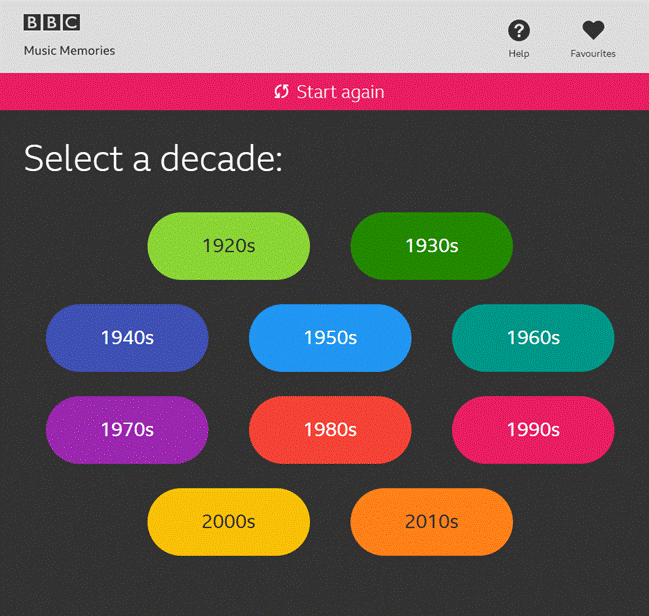
- Creating a personalised playlist of her favourite songs from whatever her favourite era was 40s and 50s. You can use sites like BBC Music Memories that have music by decades (under Popular Music) as well classical and theme tunes here
- Singing along together, even if the words don’t all come. Humming is enough. Don’t worry about perfect pitch, just share in the joy of it.
- Watching old footage of musicians or performances she loved. A black-and-white clip of a favourite crooner or a beloved band can spark genuine delight and recognition.
Reminiscence and Storytelling
Long-term memories are often far more intact than recent ones for people living with dementia. Mother’s Day is a perfect occasion to gently invite those stories forward, not to test her memory, but to honour her life.
- Pull out old photographs. Sit together with a photo album and let her lead. You don’t need to quiz her on names, just offer prompts: “She looks lovely in that dress” or “That looks like a happy day.” Let her share what surfaces naturally.
- Ask open, feeling-based questions. Instead of “Do you remember when…?” try “What did you love about being a mum?” or “What’s your favourite memory of summer?” These invite reflection without putting pressure on recall.
- Record her stories. If she’s in an earlier stage of memory loss, consider gently recording a conversation with her permission. These recordings become irreplaceable gifts for future generations.
Getting Outside (When Possible)
Fresh air and gentle movement can significantly lift mood, reduce agitation, and improve sleep for seniors with dementia. If she’s mobile, even a short outing can feel great.
- A slow walk in a familiar park or garden. Familiar routes are comforting. Point out flowers, birds, or anything that catches the eye. Walk at her pace without agenda. Meeting up with other family members outside can also reduce the pressure of being overwhelmed by people.
- Afternoon tea in the garden. Even sitting outside in a sheltered spot with a cup of tea and some biscuits can feel special. The sensory experience of outdoors, sun on skin, breeze, birdsong, is nourishing.
- A gentle drive. For those who can’t walk far, a slow drive through a favourite area, past her old neighbourhood, a park she loved, can evoke powerful positive emotions.
For the Caregiver: Looking After Yourself Too
If the person you care for is your own mother, Mother’s Day can carry a particular kind of grief, a mourning for the relationship as it was, for conversations you can no longer have, for the mum who used to plan the celebration herself. This grief is real and valid, and it deserves space.
Be gentle with yourself on this day. Plan something manageable. Ask for help from family or other carers so you can have a moment of rest. It’s okay if the day isn’t picture-perfect. It’s okay to feel sad and grateful at the same time.
The fact that you are there, showing up with love, with patience, with creative effort, is itself the greatest gift. She may not be able to tell you so in words. But somewhere, she knows.
A Few Final Tips
- Keep it short and low-key. One or two meaningful activities is better than a packed day.
- Avoid large, noisy gatherings. These can be disorienting and distressing for those with dementia.
- Follow her lead. If she’s tired, rest. If she’s agitated, simplify. The best plan is the one that serves her in the moment.
- Don’t correct, just connect. If she misremembers something, let it be. The goal is warmth, not accuracy.
- Document the day. Take a few photos or jot down a note about what made her smile. These moments are worth remembering.
Happy Mother’s Day, to every mum being celebrated, and to every caregiver making it happen.
Thanks for reading

Read more here → About Khadra Awomer’s dementia caregiver journey
Read more here → About Khadra Awomer’s dementia caregiver journey