
When someone you love reaches the later stages of dementia, activities start to look very different. Things that once worked may become too much. But that doesn’t mean the need for engagement disappears.
Your loved one still experiences the world through their senses. Touch still matters. Sounds can still be soothing. Familiar scents can still feel comforting. These small sensory moments can sometimes reach someone when words no longer do. In the later stages of dementia, the most meaningful activities are often the simplest ones. Something soft to hold. A gentle scent in the air. Music playing quietly in the background.
Here are some simple Easter sensory activities for late stage dementia that can help create connection with your loved ones.
Related: 10 Easy Easter Crafts for Seniors
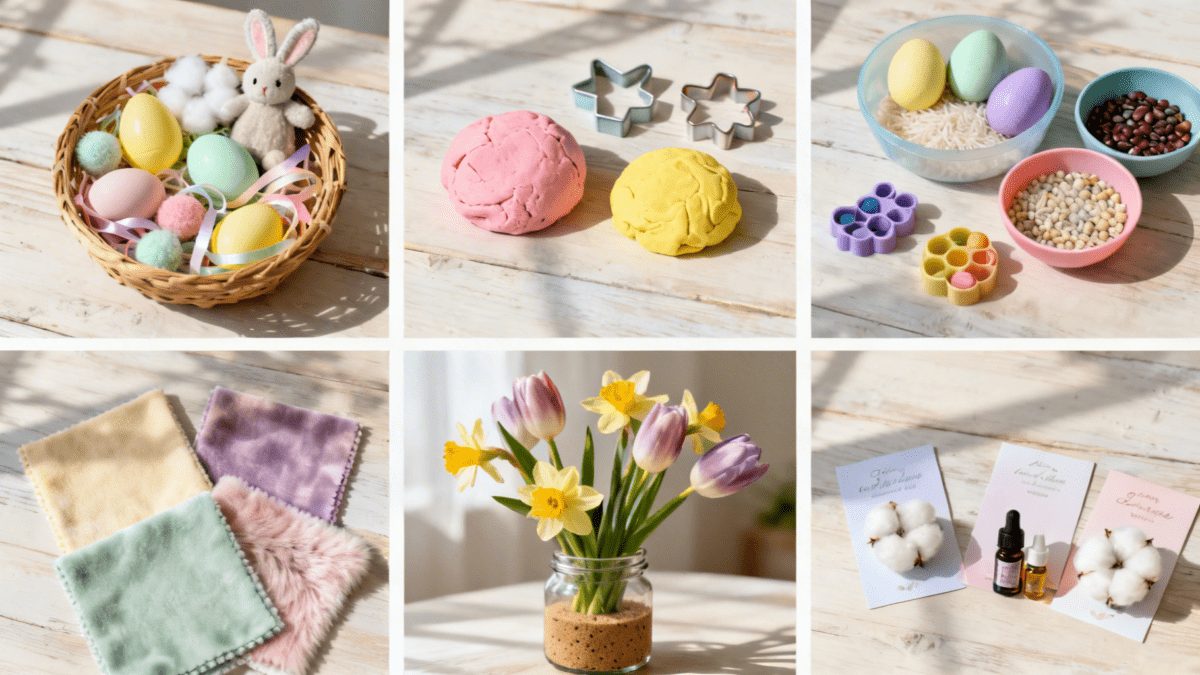
Easter Sensory Basket
A sensory basket is one of the easiest activities you can put together, and it can work surprisingly well.
The idea is very simple. You gather a small collection of objects with different textures and place them in a basket where your loved one can explore them.
There is no task and nothing to complete. The activity is simply touching, holding, and looking.
Hands often remember how to explore objects even when other abilities have faded. Picking something up, turning it over, or squeezing it can still feel natural.
For an Easter themed basket, I would include things like:
• A soft plush bunny or chick
• Cotton balls or pom poms
• Plastic Easter eggs
• A ribbon or scarf in spring colours
• Artificial flowers
• Smooth stones or wooden eggs
• Soft pieces of fabric
Try to include items that feel different from one another. Soft, smooth, slightly rough, or crinkly textures can all provide different sensory experiences.
Place the basket somewhere easy to reach, such as on a lap tray or bedside table. Sometimes it helps to hand one item at a time rather than expecting someone to reach into the basket themselves.
You can sit nearby and say something simple like, “That bunny is very soft,” or “Those eggs feel smooth.”
Some people will explore the basket for several minutes. Others may only hold one item briefly and then stop. Both are completely fine.
Scented Easter Cards
Smell is one of the senses that can stay meaningful even in the later stages of dementia.
A familiar scent can sometimes bring a sense of comfort or calm, even when the person cannot explain what they are smelling.
One simple activity is to make scented Easter cards.
You can take a folded card and place a cotton ball inside with a few drops of essential oil. When the card opens, the scent is released.
Some scents that work nicely in spring include:
• Lavender
• Lemon
• Rose
• Vanilla
• Cinnamon
You can decorate the outside of the card with simple Easter pictures or stickers.
When sharing the card, open it gently near the person rather than placing it directly under their nose. Watch how they react. Some people lean closer to scents they enjoy. Others may turn away from stronger smells.
You might quietly say something like, “This one smells like lavender.”
Even if they do not respond verbally, the scent can still create a small sensory experience.
Egg Shakers
Plastic Easter eggs can easily become simple musical instruments.
- Fill the eggs with rice, dried beans, beads, or small bells. Each one creates a slightly different sound when shaken.
- Once the eggs are filled, tape them securely so they cannot open.
- Music often reaches people with dementia in a way that conversation cannot. Even in the later stages, some people still respond to rhythm or sound.
- Place the shaker gently in their hand and help them shake it once so they hear the sound.
Many people will continue shaking it once they realise it makes noise.
You can also play music and shake one yourself. Sitting together and moving to the rhythm can create a shared moment without needing any instructions.
Soft Fabrics and Bunny Fur
Soft textures can be very calming. Something as simple as a piece of soft fabric can give someone something comforting to hold or stroke.
You could gather a few squares of fabric such as fleece, velvet, or faux fur. Easter themed pastel colours work well, but the texture matters more than the appearance.
Another option is a very soft stuffed bunny chosen specifically because it feels pleasant to touch. Place the fabric or toy in your loved one’s hands and allow them to explore it naturally.
Some people will gently stroke the fabric. Others may simply hold it. Sometimes the repetitive motion of stroking a soft texture can help settle agitation. You can sit nearby and model the movement by touching the fabric yourself.
Simple Flower Arranging
Fresh flowers can provide several sensory experiences at once. Colour, scent, texture, and the gentle act of holding something delicate.
For this activity, it helps to keep things very simple. Choose sturdy flowers with strong stems such as:
• Tulips
• Daffodils
• Carnations
Cut the stems shorter so they are easier to hold.
Place florist foam in a small container or use a wide jar with stones inside to help hold the flowers upright.
Then hand one flower at a time to your loved one and invite them to place it in the container.
You might say something simple like, “Would you like to put this one here?”
There is no right or wrong arrangement. Flowers leaning sideways or grouped together still look beautiful.
The important part is the experience of holding the flower and placing it somewhere with or without your help.
Easter Colour Sorting
Some people still respond well to simple matching activities. Large plastic Easter eggs in different colours can work well for this.
- Place a few bowls on the table and put one coloured egg in each bowl to show where the matching eggs belong.
- Then give your loved one an egg and ask if they would help you sort out the eggs with the same colour.
Sometimes they will understand the matching straight away. Other times they may simply move the eggs around randomly. Both are completely fine.
The activity still provides hand movement and visual stimulation. Some people even enjoy repeating the task once the eggs are sorted.
Pastel Playdough
Playdough can be surprisingly engaging for people in later stages of dementia.
The act of squeezing, rolling, or pressing the dough gives the hands something to do and provides gentle resistance.
You can use shop bought playdough or make your own in soft Easter colours. Here’s a simple video on how to make your own.
Place a small ball of dough in their hands and allow them to explore it naturally.
Many people begin squeezing or pressing the dough without needing instructions.
You can also offer simple tools like cookie cutters or textured objects to press into the dough, but hands alone are usually enough.
The repetitive hand movement can sometimes help release tension and create a calming rhythm.
Easter Music
Music often remains meaningful even when many other abilities have faded.
Someone who can no longer speak may still react to familiar songs or gentle melodies.
What to Play
Easter-Specific Music:
- Traditional hymns (“Christ the Lord Is Risen Today,” “Were You There,” “In the Garden”)
- Sacred classical music (Handel’s Messiah, Bach’s Easter Oratorio)
- Easter cantatas or choral music
Spring/Seasonal Music:
- Vivaldi’s Spring from Four Seasons
- Songs about spring, flowers, renewal
- Upbeat instrumental music with spring themes
Personal Favorites:
- Music from their era (40s big band, 50s crooners, 60s folk)
- Music they loved throughout life
- Songs with positive associations
Play music at comfortable volume, loud enough to hear clearly but not overwhelming. You might notice small responses such as:
• tapping fingers
• moving feet
• humming quietly
• changes in facial expression
Sometimes just sitting together while music plays can be enough.
You do not need to do anything else.
Why These Simple Moments Matter
In late stage dementia, activities are no longer about learning something new or completing a project. They are about comfort, connection, and gentle sensory experiences. This Easter, give the gift of sensory engagement. Create moments of comfort, interest, and pleasure.
- A soft fabric in the hand.
- The scent of lavender.
- The sound of music playing quietly.
- A flower placed in a vase.
These small moments may not be remembered later. But while they are happening, they still matter. They provide stimulation without pressure. They allow your loved one to experience something pleasant in the moment.
And sometimes, simply sitting together during that moment is the most meaningful part of all.