
Watercolour painting is one of those activities that’s visually rewarding, forgiving, and endlessly adaptable. Within minutes of starting, there is colour on paper, and colour is deeply satisfying to look at. For people who struggle to engage with an activity for long, this might something that’s enjoyable, I know my mother loved it.
Here are some practical approaches to watercolour painting for dementia, covering everything from basic guided painting to more sensory and freeform techniques. And because dementia affects people very differently depending on the stage, I’ve included some variations at the end so you can adapt them to what actually works for the person you are caring for.
Why Watercolour Works Well for Dementia
Watercolour paint is water-based, which means it is easy to clean up, low in any strong smells, and very safe to use. But beyond the practical side, there is something about the way watercolour behaves that makes it particularly well suited to people with dementia.
When you dip a brush into watercolour and touch it to wet paper, the colour spreads on its own. It blends, it bleeds into other colours, it does surprising things. The painting almost makes itself. For someone whose hands may be less steady, or who is not confident in their ability to draw or paint, watercolour removes that worry, just dabbing paint on a paper creates something time.
Approach 1: Guided Colour Washing
This is the simplest starting point and works well whether the person has painted before or not.
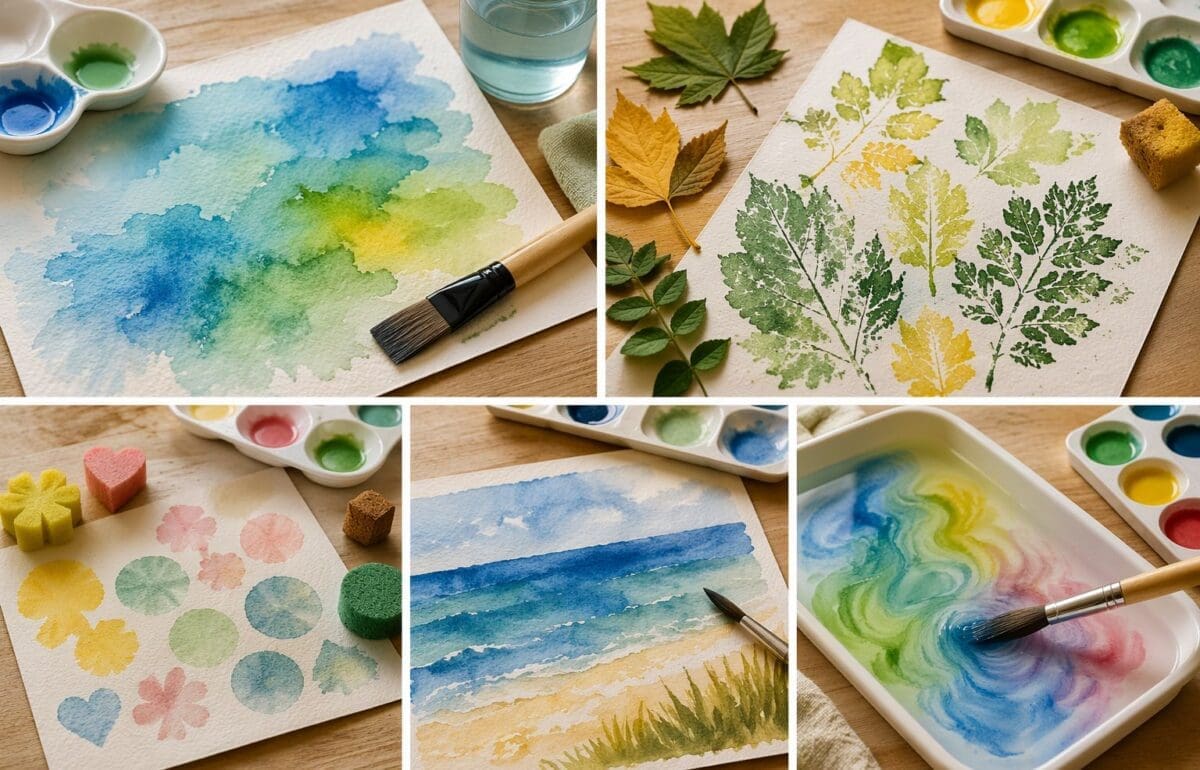
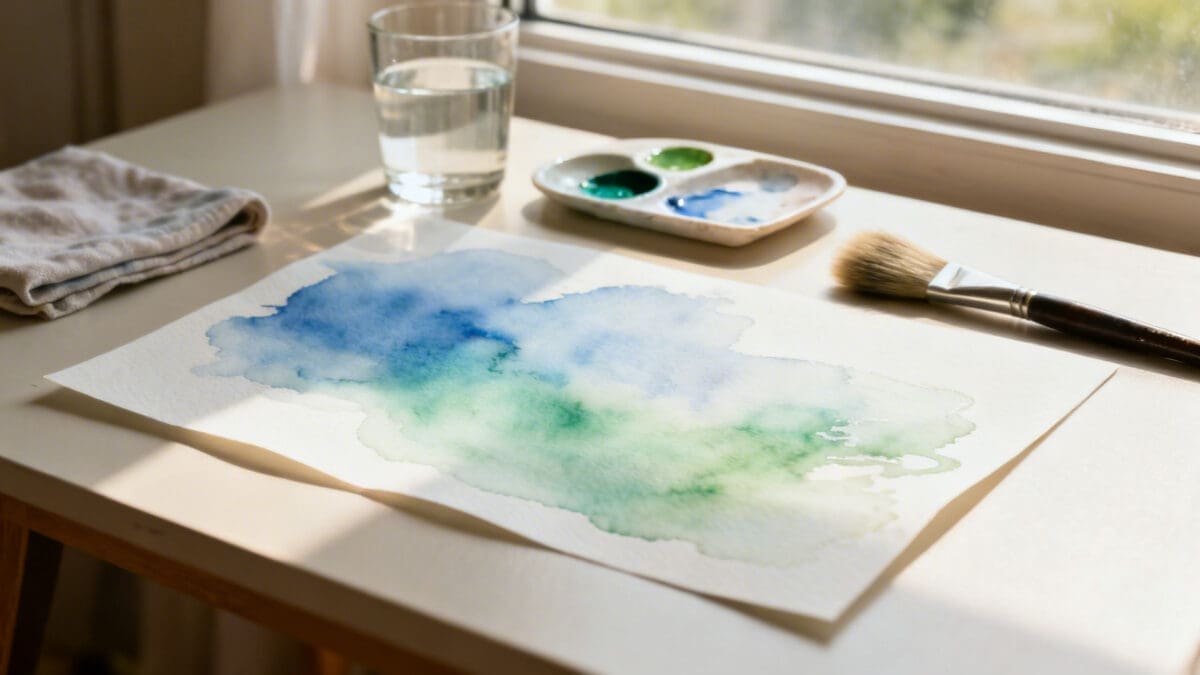
Wet the paper first with a sponge or a wide, soft brush dipped in plain water. Then offer one or two colours on a simple palette, and encourage the person to touch the brush to the wet paper and watch what happens. You do not need to direct them toward any particular result. The colour will spread and mix on its own.
Keep the palette simple: two or three colours maximum to start. Too many choices can cause confusion and frustration. A warm palette of red, orange, and yellow, or a cool one of blues and greens, gives plenty of visual interest without overwhelming.
Approach 2: Painting to a Theme
Once someone is comfortable with the basic idea of watercolour, you can introduce a loose theme without it becoming a lesson or a task.
A sky. A garden. The sea. Autumn leaves. These are themes with strong sensory and memory connections for older people, and they give a loose direction without requiring any particular skill. You might show a photograph as a starting point, or simply talk about the theme while you paint together.
The aim is not to produce a painting that looks like the sea. The aim is to spend time in the feeling of the sea: the colours, the light, the movement. If the paper ends up covered in blues and greens and a bit of white, that is a painting of the sea. Every single time.
Approach 3: Stamping and Printing with Watercolour
For people who find holding a brush difficult, or who have moved beyond the stage where fine motor control is reliable, stamping is a wonderful adaptation.
You can make simple stamps from sponge cut into shapes, from cork, from half a potato, or from household items like the base of a cup or a crumpled ball of cling film. Dip the stamp into a watercolour wash and press it onto paper. The results are amazing, and there is no skill required at all.
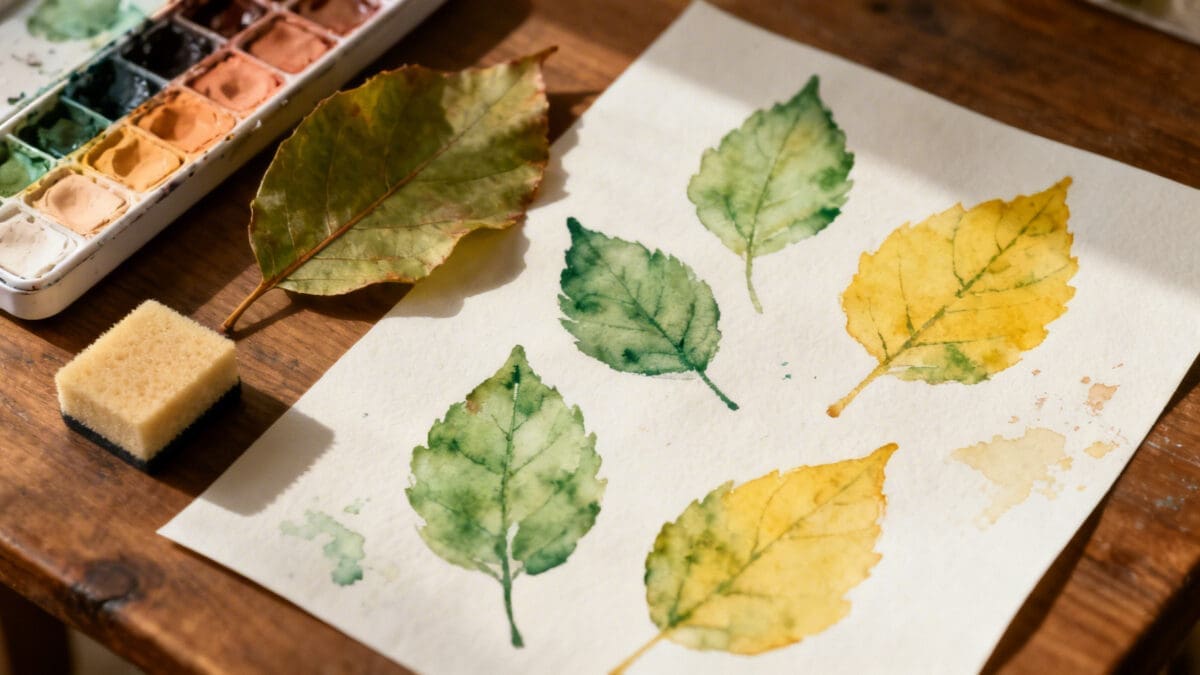
Leaf printing is a particular favourite. Press a real leaf into watercolour paint and then onto paper, and you get a detailed print that looks far more impressive than the effort involved. For people who love gardens or the outdoors, it creates an immediate connection to something familiar.
Approach 4: Collaborative Painting
This one removes any performance pressure from the person with dementia completely.
You start the painting together. You might lay down a simple wash of colour, and then invite the person to add to it, to press a sponge somewhere, to drip a drop of another colour, to make a mark wherever they choose. You respond to what they do, adding your own marks, and so on.
It becomes a conversation in paint. There is no wrong answer, no finished product to aim for, and no sense that someone is doing it for them. You are genuinely creating something together. At the end, you both made it.
Approach 5: Watercolour as a Sensory Experience
At times when engagement with a task is very limited, or when the person is more in a sensory mode than a doing mode, you can strip watercolour painting right back.
A tray of water with a few drops of watercolour in it. A large brush to swirl through it. Paper placed in the tray to absorb the colour. It’s water play with colour in it – engaging, and soothing from the sound of water, the feeling of the brush in the hand, and the visual movement of colour through water, an enjoyable, artistic sensory experience.
Variations by Stage of Dementia
Mild stage
People in the early stages of dementia may have painted before, or they may feel self-conscious about starting something new. Approach 2, themed painting, often works well here, because it gives a direction without being prescriptive. Acknowledge what they create genuinely. ‘I really like that blue’ is more useful than ‘that is amazing’, which can feel patronising.
Moderate stage
Guided colour washing and collaborative painting are both well suited to moderate-stage dementia. The activity needs more support from you, but the person can still engage meaningfully. Keep sessions short, around fifteen to twenty minutes, and do not push past the point of enjoyment. Stamping and printing work particularly well at this stage because the results are consistently rewarding regardless of motor skill.
Later stage
The sensory approach comes into its own here. The goal is not a painting. The goal is a pleasant, calm, multi-sensory experience that involves colour, water, and gentle handling. You might do most of the physical activity yourself while keeping the person involved through touch, conversation and observation. Feel of the brush on their hands, describing what you see as you work keeps them present and included even when independent action is limited.
A Note on Timing and Environment
Morning or mid-morning is usually the best time. Energy and focus tend to be better earlier in the day for most people with dementia. Keep the space uncluttered, the light good, and have everything laid out before you sit down together. I don’t forget to have fun, whatever is created will be beautiful, I’ve framed my own mum’s work.
Watercolour painting is not just about the painting. It never really is. It is about a bit of colour, and being together in a way that does not feel like care. That is worth quite a lot.

Read more here → About Khadra Awomer’s dementia caregiver journey