
You hear about the cost of social care on the tv, in the news, with politicians, a crisis that nobody has the balls to actually try and fix because the money is not there. But then there’s the bill that kept falling on the doormat of the person, who for years kept plugging the gaps that the system left behind, you, me, the caregiver or really the unpaid carer/caregiver.
I know that bill really well, I’d been paying it for years but this past year it finally caught up with me. But you don’t hear a lot about life after and the financial cost of caregiving. And I wasn’t careless with money!
I’m broke, that’s the personal financial cost to me of of thirteen years of full time dementia caregiving, and that’s on top of the emotional costs many people deal with. And that’s what makes it so much harder because you’re not prepared when the financial cost really hits you, just when you’re least prepared to deal with it.
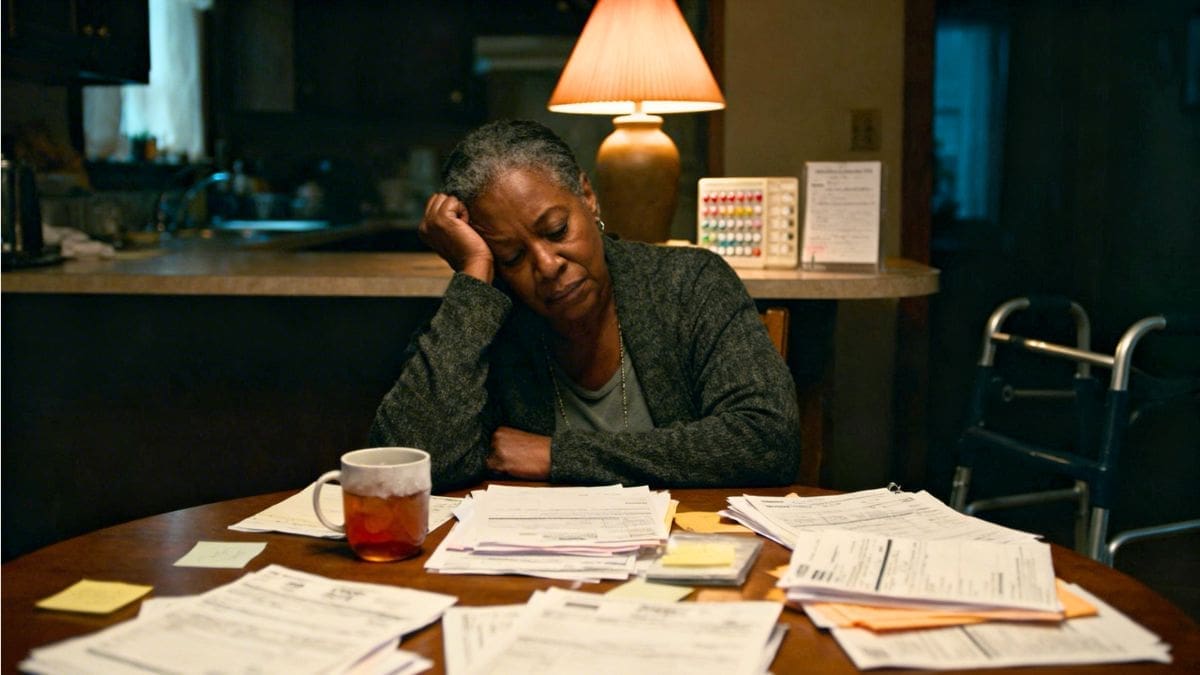
What Caregiving Actually Costs?
Let’s start with the obvious one, when you become a full time caregiver you stop earning. Or in my case, I reduced my hours to part time first so I lost half my income.. For some people this happens gradually, cutting hours here, taking unpaid leave there, until eventually the caring role simply consumes everything and paid work becomes impossible. That’s what happened to me. Either way the financial impact is the same.
No salary means no income, reduced saving, no pension contributions unless you remember to claim Carer’s Credit, which the government does not exactly advertise loudly.
For thirteen years I was largely out of the workforce. Thirteen years of compound interest on a private pension I wasn’t paying into. Thirteen years of a career that didn’t advance. Thirteen years of a CV with a gap I now have to explain to employers who have never had to make the choice between caring for a parent and a pay cheque. 13 years of a life on hold, and life plans that are not realised.
Eventually you may get access to benefits that “don’t replace income” but cost the government less than a cup of coffee a day to provide, so you live on such a basic income that you dip into your savings time and time again. But that’s just the beginning.
The Costs Nobody Counts
While you’re caring the money goes out in so many ways that you stop noticing them.
The energy bills are higher because someone is home all day and needs the heating on. The food shop is more expensive because someone needs a specialist diet or texture modified meals or particular foods that comfort them even if they cost more. You’re driving to appointments constantly, GP, consultant, memory clinic, physiotherapy, and the petrol costs build up.
Then there’s the equipment. The grab rails. The shower chair. The raised toilet seat. The specialist mattress. The incontinence supplies that aren’t always fully covered. The baby monitor, the nightlights. the door alarms you buy to prevent falls and keep your loved one safe.
And before you say that disability payments cover these things, let me tell you truthfully, they don’t, they help with a fraction of the real costs, the gaps are filled by you because there isn’t another option.
I used my savings again. Just to keep things going and to make sure her needs were met. You don’t hear that in the news
The Bill That Arrives After
I knew caregiving was expensive while I was doing it. What I didn’t fully understand was how the financial damage continues, and in some ways accelerates, after the caring role ends.
Carer’s Allowance stops after 8 weeks in the UK, there’s no transition period or support after that. No acknowledgement that you have just spent years doing work the government would otherwise have had to fund at enormous cost.
And that happens at the worst time, when you’re busy dealing with grief, funeral arrangements and all the death administration that comes with a loss. You’re not in the right frame of mind to deal with trying to sort out your own financial situation.
Some people have to struggle to find a new home as well as maybe dealing with debts that have built up in loans or credit cards from years of having no income.
The benefits system is not designed for people in post-caregiving situations. It assumes you are either employed, job seeking, or unable to work due to your own health conditions. The reality of being financially depleted, mentally exhausted, grieving, and trying to rebuild a working life after years away from it doesn’t fit neatly into any of those boxes.
It’s scary to be so financially insecure, especially when you think of life before. Not being financially independent now causes so much stress, any bills just seem enormous now and you constantly worry about what’s coming next, the unexpected costs.
The Health Cost That Becomes a Financial Cost
Long term caregiving takes a serious physical and mental toll. Broken sleep for years. Chronic stress. No time for your own health needs, the GP appointment you kept rescheduling, the dental check you skipped, the prescription you didn’t collect because there wasn’t time. And then there are the real physical injuries you sustain from pulled muscles, back pain, and more.
I came out of caregiving with all of that, and then the grief hit six months later so much so that my first attempt at returning to traditional employment fell through.
Therapy costs money. Medication costs money. The dental work from the stress grinding costs money. The GP appointments for the things that got ignored during caring cost time if not money. All of it happens at exactly the moment when you have the least financial resource to deal with it.
What the System Owes and Doesn’t Pay
I want to be clear about something. The financial devastation of long term caregiving is not primarily the result of individual bad decisions. It is the result of a social care system that is chronically underfunded and that relies on unpaid family caregivers to fill the gaps, and then offers those caregivers almost nothing when the role ends.
The value of unpaid care in the UK is estimated in the billions annually. Carers UK puts it at around £162 billion a year, more than the entire NHS budget. That is the scale of what family caregivers contribute to keeping the system functioning.
And when it ends? A benefits system that doesn’t help you when you need it the most. A job market that sees the gap on your CV, and maybe doesn’t value your experience, either way whatever job you find will be at a much lower rate because of that gap.
Then you have a pension system that will pay you less because you were contributing much less. A mental health system stretched too thin to offer real support to former caregivers. And a general cultural assumption that you should be getting on with things by now.
The conversation about social care reform happens at a policy level but what about the former caregivers sitting at their kitchen table wondering how they’ll manage, their savings used up, years of earning potential lost, career progression that’s been limited, and physical and mental health damaged, what about them?
What Rebuilding Actually Looks Like
I want to end with something practical because I think that’s more useful.
Here’s some advice and what I’m actually doing for myself.
- Check your National Insurance record. If you were claiming Carer’s Allowance you may have been getting NI credits automatically. If not you may be able to claim Carer’s Credit retrospectively for some years. It is worth checking on the government website.
- Look at what benefits you are now entitled to. Your circumstances have changed significantly. Universal Credit, Council Tax Reduction, and other support may now be available to you that weren’t while you were caring. Citizens Advice can help you understand what you’re entitled to.
- Be honest about what you can and can’t do right now. Trying to force yourself back into full time employment before you’re ready, physically, mentally, financially, can make things worse not better as I found to my cost. Part time, freelance, building something slowly, these are legitimate paths.
- Because I cannot rely on a standard salary, I have to build my own income ecosystem. I’ve gone back to university, but I still need to make money so I’m freelancing my writing, building social media like Youtube, making digital products and doing everything I can to rebuild.
It’s going to take longer than you think and costs more energy than you expect. But it is possible. The financial cost of caregiving is real and it is significant and it deserves to be talked about as openly as the emotional cost.
I am doing it in real time and I will keep sharing honestly about how it goes.
Let me know if you’re going through this and how you’re managing, we can all learn from each other.