With Halloween fast approaching, I want to share a few last-minute tips for Halloween for seniors with dementia to help you think about thoughtful changes to make for calmer and more enjoyable evening.
Halloween is an exciting time for kids & families, but it can be challenging for seniors with dementia.
As a caregiver who has been through the ups and downs of Halloween, I’ve learnt it’s about knowing what to include, what to avoid and being ready to adapt as the evening unfolds.
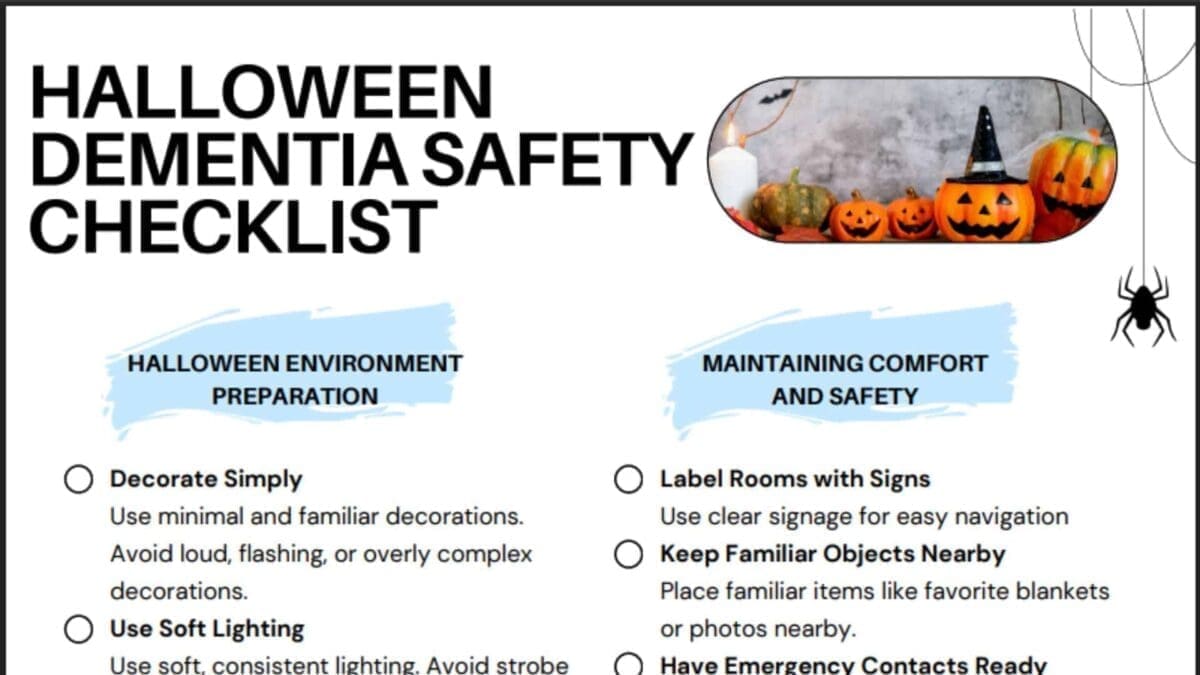
I’ve put together a FREE, printable Dementia Halloween Safety Checklist that you can keep to use to help you get ready. I kept mine on the fridge on the run up to Halloween.
Halloween Dementia Safety Checklist
Here’s the checklist, just click on it to download, save and print it. Read on for the full guide.
How to Ensure a Safe and Spooky Celebration for Your Loved One
Halloween can be a deeply unsettling and bewildering experience for seniors living with dementia. The combination of objects, costumes, noise, lights, and fireworks can trigger a range of complex emotions and perceptions. As their brains process these stimuli, the signals may become distorted, leading to fear, confusion, and anxiety. We approach this by creating a supportive and calming environment, where we can help our loved ones have a great Halloween experience.
Respect individual choices
Everyone with dementia is different. Some loved ones may enjoy a little spooky fun, while others may not. Let them guide you. You can read more on how Halloween can affect someone with dementia here.
Avoid leaving them alone or pressuring them into something that they don’t really want to do.
Decorations
Halloween decorations can be a lovely way to set the mood, but too much going on visually can feel overwhelming for someone with dementia. I try to stick to a few familiar touches that feel cheerful rather than scary.
A smiling pumpkin by the window, or some orange bunting can bring a seasonal feel without creating anxiety. If you like making things together, simple DIY decorations such as pumpkin pom-poms or paper garlands can be a nice activity to share.
I avoid cluttering the room with cobwebs or frightening masks, as I’ve seen how quickly these can unsettle someone.
Avoid ghoulish ghosts, gory monsters, scary witches, fake skeletons, cobwebs, or other frightening images.
Use Soft Lighting
Lighting makes a huge difference to how relaxed the evening feels. I’ve learned that warm, steady lighting is far more comforting than anything too dark or flickery. Battery-operated candles are my favourite because they give a cosy glow without any fire risk. I steer clear of flashing lights or strobe effects, as these can cause disorientation or even distress for someone with dementia.
Avoid bright, flashing, strobing lights.
Monitor Temperature
When the weather turns cooler, I make sure the house is warm before the evening starts. A comfortable temperature means fewer worries about your loved one becoming cold or restless. I keep a couple of soft blankets nearby in case they want to wrap up, and I make sure doors and windows aren’t left open for long periods. I’ve found that small temperature changes can make a big difference to how settled someone feels.
Ensure Safe Pathways
Before the night begins, I like to do a quick walk around the house to check that pathways are clear. Wires, low decorations or even a stray shoe can be enough to cause a trip. It’s worth making this part of your routine so you can focus on enjoying the evening rather than worrying about accidents.
Costume and Appearance Safety
If your loved one wants to dress up, comfort should come first. I often look for ways to add a touch of fun to their normal clothing rather than buying a whole costume. A bright scarf, a fun hat or patterned socks can still feel festive without being uncomfortable. I avoid masks and heavy face paint because they can be irritating and make it harder to see or breathe easily.
Avoid scary costumes or masks
Label Rooms with Signs
On nights when there are more people around, even someone’s own home can start to feel unfamiliar. Simple labels or a small picture on a door can make it easier for your loved one to find their way without having to ask. It’s a small step that can reduce confusion.
Keep Familiar Objects Nearby
I always keep a few favourite items close by, whether that’s a soft blanket, a cushion they love or a framed family photo. Having these things within reach can bring comfort if the evening starts to feel overwhelming. Sometimes just holding something familiar can help someone feel grounded again.
Have Emergency Contacts Ready
Even if you never need them, it’s reassuring to have emergency numbers and medical details close to hand. I kept mine in the fridge as “message in a bottle“, medical staff know to check this, I also had them saved in my phone. I also make sure that my loved one isn’t left unsupervised for more than a moment, especially when there’s more noise and activity than usual.
Plan for Early Evening Activities
I’ve found that my loved one was often more alert and settled earlier in the day, so I try to bring the main Halloween activities forward.
Baking biscuits, carving pumpkins with friendly faces or watching a light-hearted film can be just as enjoyable in the afternoon. Later in the evening, I keep things quieter to avoid agitation or tiredness setting in.
You can find 10 Fun Halloween Activities for Dementia in this article
Avoid having complex long-winded activities.
Food and Treats
I like to prepare snacks that are easy to eat and safe for everyone. Soft biscuits, pumpkin muffins or slices of fruit arranged with simple Halloween touches are always popular.
I use cups and plates with a seasonal design for a bit of fun, and I offer drinks regularly so no one gets dehydrated.
I avoid anything sticky or hard that could cause choking and I keep sugary treats to a small amount to avoid any tummy upset.
Create a Quiet Space
No matter how well you plan, Halloween can still become overwhelming. Having a quiet space ready means your loved one has somewhere to retreat if they need a break. I make sure this room is away from the main activity, with familiar objects and soft lighting to help them feel calm. I have a set headphones, favourite music or movies ready to play or a book to read together.
Limit Trick-or-Treaters
The constant sound of the doorbell or knocking can be unsettling, so I decide in advance how to handle it.
Sometimes I’ll answer the door myself and keep visits short, or I’ve hang a no Trick or Treat Poster and turn off the doorway light to signal that we’re not taking part in trick-or-treating that evening.
It’s about finding the balance between being part of the fun and protecting your loved one’s comfort.
Use Familiar Music or Sounds
Gentle, familiar music can create a relaxing atmosphere and help reduce anxiety. I like to choose songs that mean something to my loved one, often from a time in their life they remember fondly. I avoid loud, eerie sound effects or sudden noises, as these can be startling and unpleasant.
Final Thought
Halloween doesn’t have to be avoided if your loved one has dementia, but it does need a bit of thought. By making small adjustments and keeping their comfort in mind, you can help create an evening that feels safe and reassuring.
I hope the Dementia Halloween Safety Checklist gives you the confidence to enjoy the occasion without worrying that it might become too much.
Just taking the time to plan will hopefully help you have a safe, dementia-friendly, and enjoyable Halloween.
For more Halloween tips, check out this article Tips for a Safe Halloween for Dementia Caregivers.
Happy Halloween!
How to Celebrate Halloween with Dementia: Tips, Crafts and Activity Ideas
Halloween Crafts for Seniors
Halloween Games for Seniors: Fun, Safe and Easy Ideas for Every Setting
13 Tips for a Safe Halloween for Dementia Caregivers
How Halloween Can Affect Someone With Dementia?